Attempts to curb Ebola cases in DR Congo fail with more than 5,000 confirmed
The Democratic Republic of Congo is facing the biggest Ebola epidemic in its history. Government data showed on Tuesday that cases now exceed 5,000. Efforts to contain the deadly illness are being hampered by weak health infrastructure, community resistance and instability.
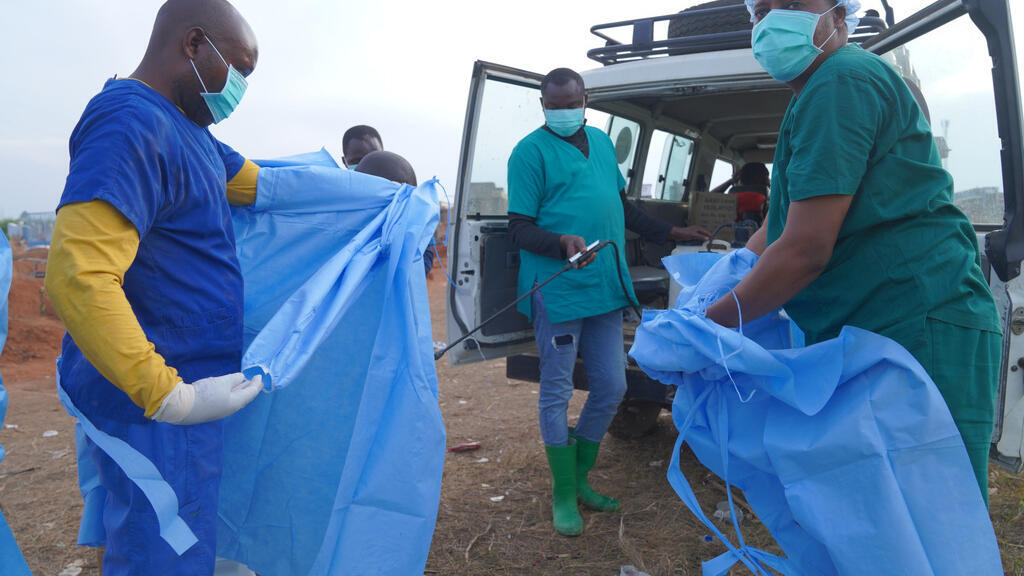
The Ebola outbreak in the Democratic Republic of Congo is rapidly escalating, with over 2,500 fatalities recorded and more than half of those occurring in the last 20 days, according to the UN's senior coordinator on the disease, Julien Harneis. This outbreak is the largest in the country's history and is spreading at an alarming rate, covering an area larger than France.
Harneis stated that the epidemic is growing both faster and wider than previous Ebola responses. The outbreak, which is now in its 17th wave, has been spreading for weeks before it was officially declared on May 15. It has hit regions in the north and east of the country, where state presence is weak, health infrastructure is lacking, and armed groups have operated for decades.
Doctors Without Borders (MSF) has expressed concern that the outbreak is spreading at an alarming rate, faster than the response can keep up. MSF president Javid Abdelmoneim stated that the epidemic continues to spread, moving faster than the response can contain it. The virus, Bundibugyo, does not yet have an approved vaccine or specific treatment, though trials are underway. The World Health Organization (WHO) has pledged 70,000 doses of the Ervebo vaccine, which has shown promise against the more common Zaire strain.
The challenges in curbing the virus are numerous, with rampant insecurity and a weak health system in eastern DRC cited as major obstacles. The operating conditions are described as "brutal" by Harneis, who noted that 160 healthcare workers have fallen ill with Ebola, including 43 fatalities. Attacks on ambulance and other frontline workers have also been reported.
Additionally, a barely functioning banking system has made it difficult to distribute wages to those working on the outbreak, despite international funding cuts that have reduced the capacity of humanitarian organizations by a third. Harneis emphasized that with more staffing and resources, the transmission can be slowed and eventually stopped within months.
However, if no action is taken, the epidemic will become more deadly, potentially spreading wider and into neighboring countries like South Sudan and Uganda.
Written by urgent.news from RTE News's reporting — not their text. Machine-written — may contain errors; check the original before relying on it.
This story
This is one outlet's version. Read the fullest account.
- Ebola outbreak in Democratic Republic of Congo becomes deadliest in country’s history egyptindependent.com
- Congo-Kinshasa: WHO and Africa CDC Welcome the Allocation of Ebola Vaccines to the Democratic Republic of the Congo allafrica.com
- EBOLA BUNDIBUGYO VIRUS DISEASE OUTBREAK Democratic Republic of the Congo | Uganda Weekly External Situation Report 14, Data as of 16 August 2026 afro.who.int
- Ebola outbreak in DR Congo growing 'exponentially' as death toll passes 2,500 france24.com
- Ebola outbreak becomes deadliest in Congo history thehill.com
- Ebola cases in DR Congo top 5,000 – Africa CDC punchng.com
- Ebola outbreak in DR Congo 'growing exponentially' - UN rte.ie
- Ebola is spreading faster beyond Congo epicenter, straining outbreak response moneyweb.co.za