Asia Techonomics: Indien hat das weltgrößte Echtzeitbezahlsystem – und riskiert nun dessen Erfolg
In Indien lässt sich praktisch überall bargeldlos bezahlen. Die Infrastruktur dafür ist für Händler und Verbraucher gratis. Doch das soll sich ändern. Mit womöglich gravierenden Nebenwirkungen.
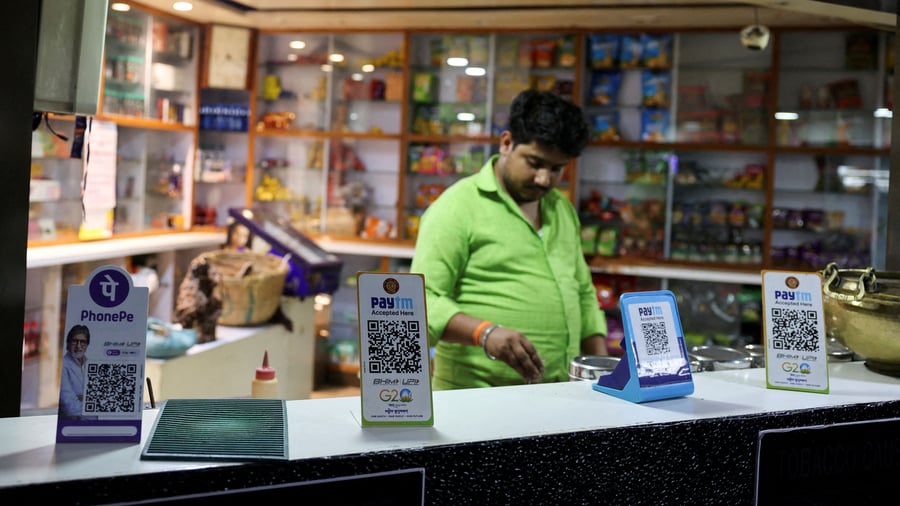
In India, the country's real-time payment system appears to be superior to those in Germany, as evidenced by a coconut vendor at a roadside stand. While cash remains the primary method of payment in many bakeries, convenience stores, and eateries across Germany, India grapples with a scarcity of locations accepting only cash. Instead, rudimentary QR codes affixed to small signs are ubiquitous across the country, enabling customers to scan and make real-time transfers via their smartphones.
These transactions are facilitated by the nationwide UPI (Unified Payments Interface) platform, which operates seamlessly across various banks and fintech applications. Established a decade ago, UPI has become the cornerstone of India's digital infrastructure. In July alone, the platform processed 24 billion transactions with a total value of roughly 270 billion euros.
However, the success model of UPI is now facing a significant alteration. Starting from now, transaction fees may be introduced, potentially diminishing the platform's unique advantage that propelled India to the forefront of global real-time payment systems.
Written by urgent.news from Handelsblatt's reporting — not their text. Machine-written — may contain errors; check the original before relying on it.