Why is Chinese state media telling people to stop using English AI terms?
China’s state media has called for English-language terms related to artificial intelligence (AI) to be dropped in favour of standardised Chinese equivalents in a push to boost the country’s “discourse power”. As AI technologies have rapidly spread in China, English terms have entered common speech in the country, such as “agent” and “LLM” for large language model, a commentary published by the…
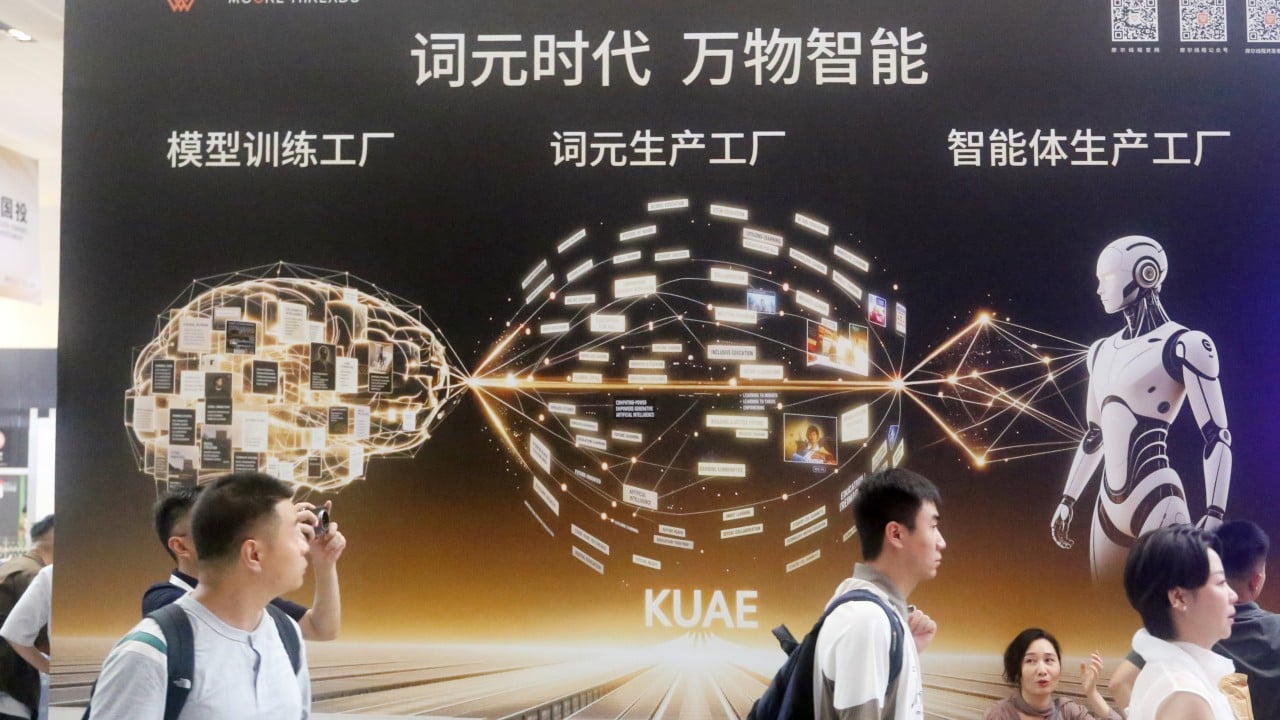
China’s state media has urged the public to abandon English-language terms related to artificial intelligence, advocating for standardised Chinese equivalents to strengthen the country's "discourse power". As AI technologies proliferate in China, English terms like "agent" and "LLM" (for large language model) have become commonplace.
The People's Daily commentary posited that dependence on foreign jargon could create "cognitive dependency" and erode China's influence in global technology governance. This call follows the official adoption of "ciyuan" as the standard translation for "token" in March at the China Development Forum 2026. The commentary argued that foreign jargon could deprive China of the authority to define key concepts, stifle the growth of original domestic theories, and hinder the development of a Chinese framework for discussing technology.
English AI terms are often difficult for ordinary Chinese people to comprehend, contrasting with earlier localised technology names like "dian nao" for "computer". The article contended that untranslated terms widen the digital divide and gradually dilute the integrity and continuity of the Chinese language. Strengthening China's "discourse power" is a priority for authorities in recent years, encompassing shaping narratives, boosting external propaganda, and fostering domestic academic frameworks.
The People's Daily noted that while numerous technical terms already had standard Chinese translations, AI experts would typically read research papers and software documentation in English. The commentary suggested a dual-track approach, retaining English terms in international exchanges and collaborations but actively promoting standard Chinese translations in domestic contexts like education and policy popularisation.
This approach aims to bridge the gap between official terminology and rapid tech iteration, promote "native language awareness" among the public, and collectively build a strong language defence.
Written by urgent.news from South China Morning Post's reporting — not their text. Machine-written — may contain errors; check the original before relying on it.
This story
This is one outlet's version. Read the fullest account.