Western Himalaya warming faster, will lose most snow: What recent study found
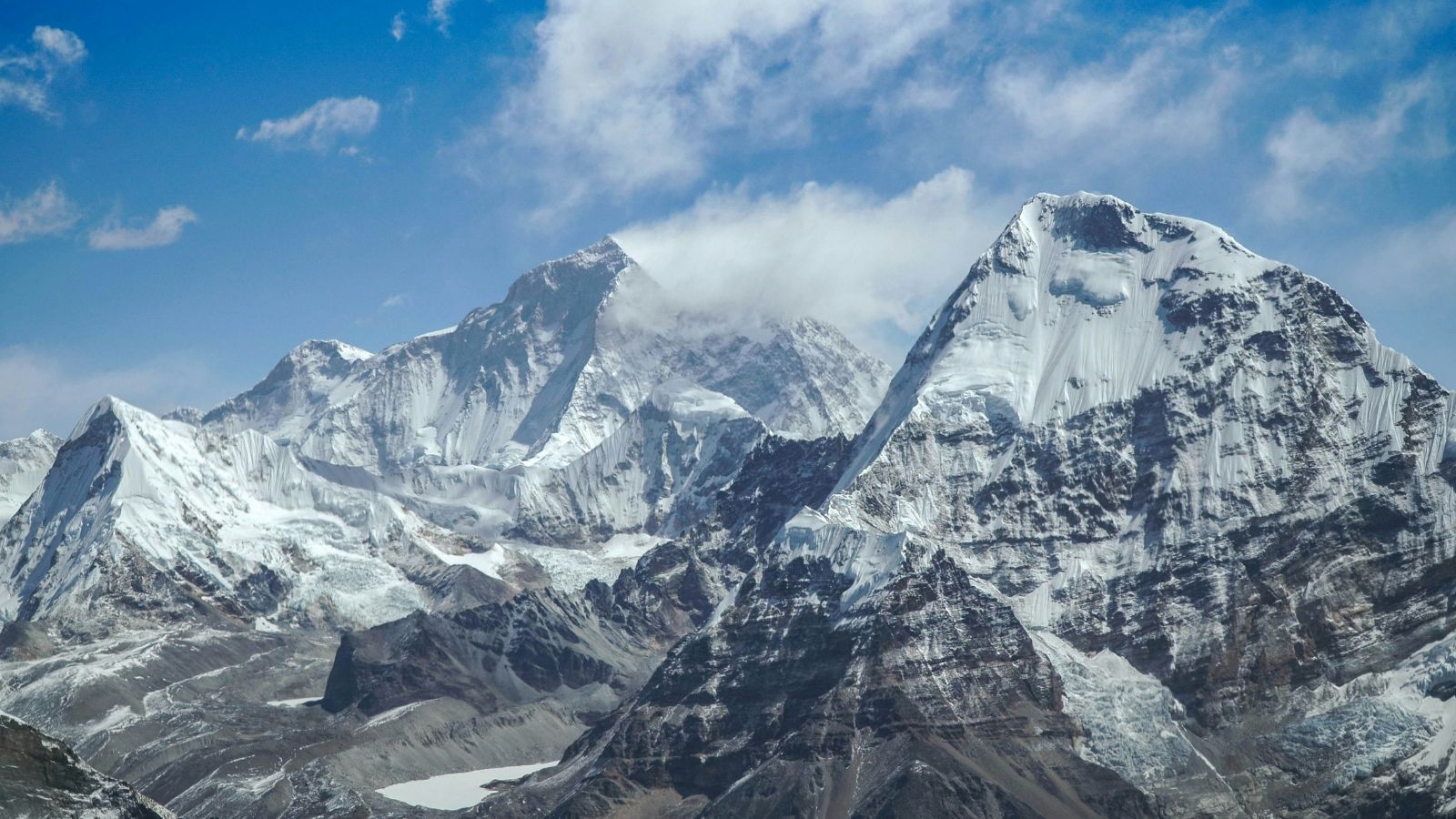
The western Himalaya, encompassing Ladakh, Jammu and Kashmir, and Himachal Pradesh, is experiencing accelerated warming compared to the central and eastern regions of the Himalaya, according to a recent study. This study, titled 'Vulnerability of the Himalayan region under the climate change', was published in the Journal of Earth System Science in June and underscores the unique vulnerability of the western Himalaya to snow loss in the coming years.
The research, conducted by a team of scientists from Birla Institute of Technology (BIT), Mesra, Indian Institute of Tropical Meteorology, Pune, and Ashoka University, synthesized 120 years of temperature records spanning from 1901 to 2020 with eight global climate models to analyze warming and snow loss across the three Himalayan sectors in India. The findings reveal that the western Himalaya is warming at a faster rate than its central and eastern counterparts, in every season and under all tested emission scenarios.
Protyusha Mukhopadhyay, the lead author from BIT, Mesra, emphasizes that the western Himalaya consistently emerges as the most sensitive region, warming the most and losing the most snow under all tested pathways. The study finds that winters are warming faster than springs in the western Himalaya, and night-time temperatures are rising more rapidly than daytime highs.
Moreover, springtime snow loss in the western Himalaya could be up to three times more pronounced under a high-emission scenario by the end of the century compared to a low-emission scenario.
Under a high-emissions scenario, the western Himalayan winter could warm by more than 7°C, followed by 6.71°C in the central sector and 5.82°C in the eastern sector, compared to the early 1900s. Spring temperatures are projected to increase by 6.91°C in the western Himalaya, 6.41°C in the central sector, and 5.16°C in the eastern sector.
The researchers from IITM, Pune, utilized two types of evidence in their analysis, namely a 120-year record of actual temperature measurements and eight global climate models, which were first validated against observed trends and then projected forward to 2100 under different emission scenarios.
Written by urgent.news from The Indian Express's reporting — not their text. Machine-written — may contain errors; check the original before relying on it.