Watch: Chinese company unveils ‘Superman’ robot that it says is faster than Usain Bolt
Days before its highly anticipated debut on China’s sharemarket, Unitree shows off its high-speed robot that it said it built in three months and “breaks the limits of humanity”.
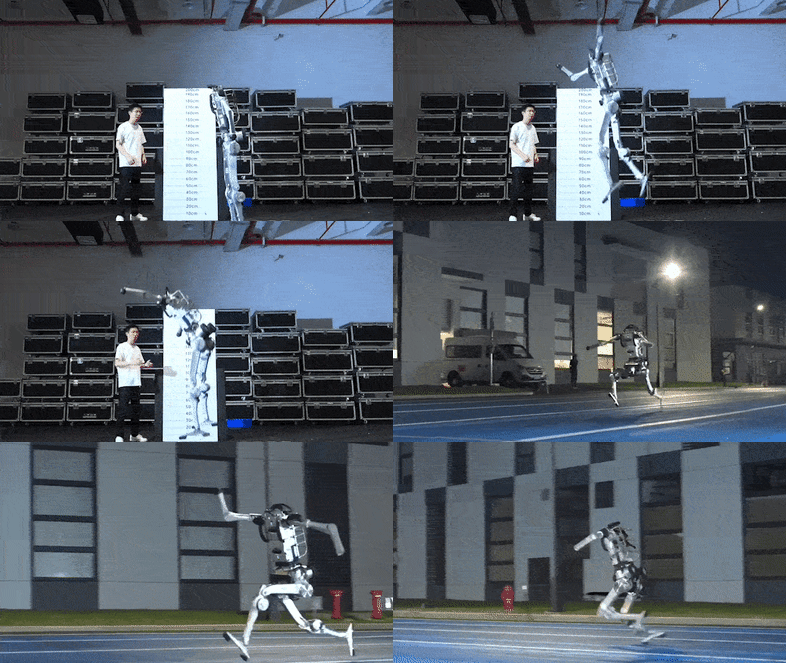
Unitree, a Chinese robotics company, has unveiled a new humanoid robot it dubs "Superman." The company asserts that this prototype can sprint at a top speed of 28.3 miles per hour, outpacing the fastest human sprinter, Usain Bolt. A video released by Unitree demonstrates the robot's remarkable abilities. The robot's long, 0.85-meter legs enable it to leap over a 2-meter high bar, equivalent to a 6.5-foot jump.
Additionally, it can reach a peak speed of 12.66 meters per second, narrowly surpassing Bolt's world-record speed of 12.42 m/s during his historic 100-meter run in Berlin in 2009. However, the video shows the robot exhibiting an unusual, unstable gait, giving the impression it is constantly on the brink of falling forward. The performance figures have not been independently verified, and achieving such high speeds does not guarantee success in a timed sprint.
Unitree claims that the robot was developed within just over three months, indicating a rapid pace of development. The company asserts they have manufactured and delivered around 18,000 bipedal humanoid robots across multiple models by the end of July. Unitree's announcement of Superman comes at a significant time for the company, as it is scheduled to go public on Shanghai's STAR Market on August 19, having raised 6.1 billion yuan (approximately $905 million) in an initial public offering.
This makes Unitree the first general-purpose robotics firm to list on mainland China's stock market. The company's rapid progress in robotics is evident with its H1 humanoid robot previously achieving a peak speed of 10.1 meters per second. Unitree emphasizes the measurement equipment may have some error and does not provide a complete 100-meter time.
For perspective, the Tien Kung Ultra robot won the 100-meter race at the inaugural World Humanoid Robot Games in 21.50 seconds, with an average speed of 4.65 m/s, considerably slower than Superman's claimed peak. Beijing will host the second World Humanoid Robot Games from August 22 to 26, featuring 2,056 robots from 666 teams competing in 30 events with 21 scenario-based challenges.
There is no official confirmation if Superman will participate, but the presence of other robot manufacturers could pose a challenge.
Written by urgent.news from TechSpot's reporting — not their text. Machine-written — may contain errors; check the original before relying on it.
This story
This is one outlet's version. Read the fullest account.
- Unitree shows off its new Superman robot that it says can outrun Usain Bolt and jump 6.5 feet techspot.com
- Chinese humanoid robot maker Unitree opens over 600% higher in Shanghai debut thehindubusinessline.com
- China’s Unitree unveils ‘Superman’ robot qatar-tribune.com
- China’s Unitree unveils ‘Superman’ robot as fervor builds ahead of Shanghai debut japantimes.co.jp
- Watch: Chinese company unveils ‘Superman’ robot that it says is faster than Usain Bolt smh.com.au
- China’s Unitree unveils ‘Superman’ robot as fervour builds ahead of Shanghai debut indianexpress.com
- China's Unitree unveils 'Superman' robot as fervour builds ahead of Shanghai debut finance.yahoo.com
- Chinese humanoid robot maker Unitree set to jump over 600% in Shanghai debut channelnewsasia.com