UPSC Mains Answer Practice — GS 3 | Nuclear power to net-zero Railways : 2 energy themes to prepare (Week 168)
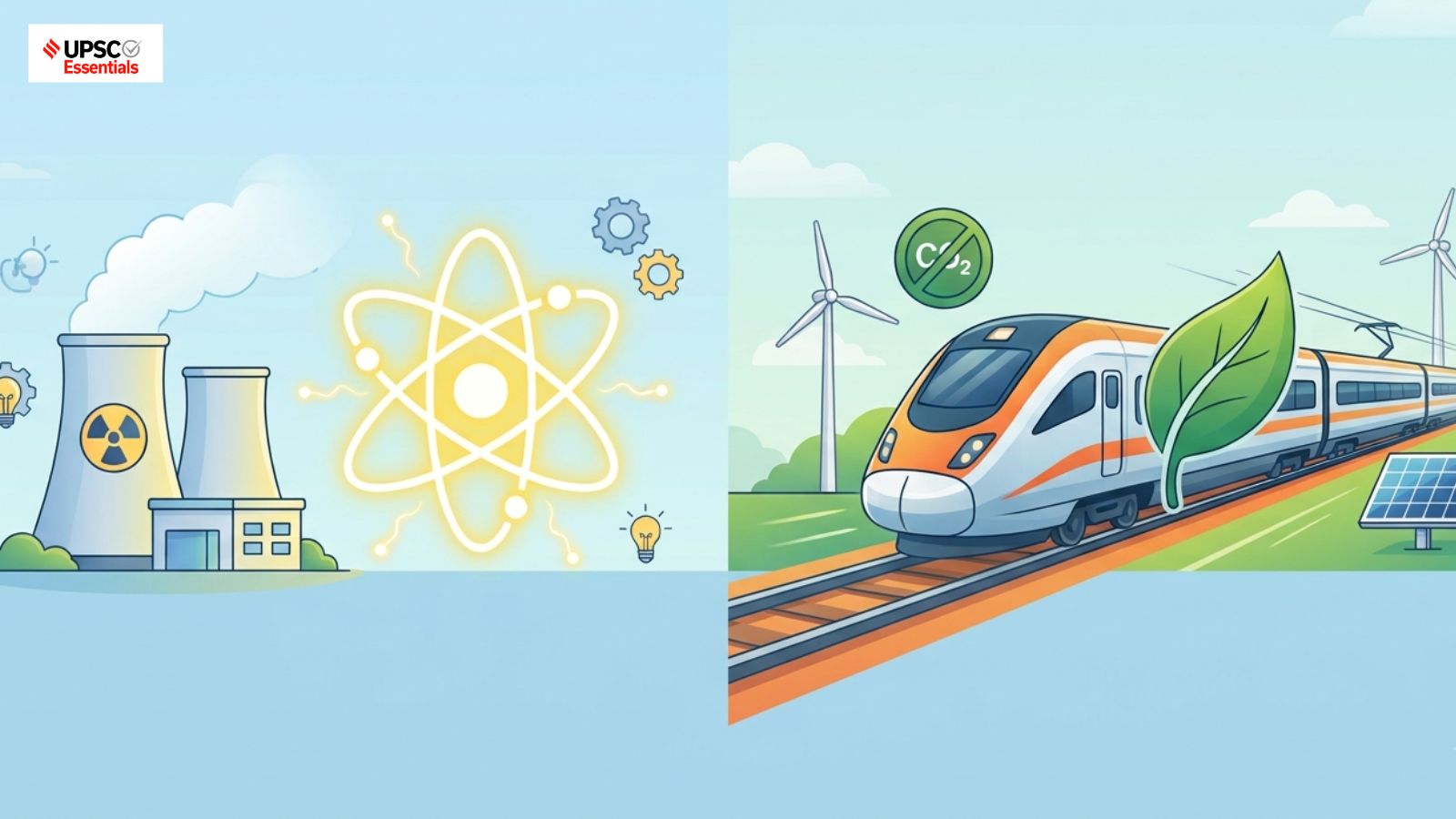
India's ambition to generate 100 GW of nuclear power by 2047 represents a substantial change in the nation's energy strategy. The question examines how nuclear energy, including Small Modular Reactors (SMRs), can bolster India's energy security and meet the growing electricity requirements of emerging technologies such as AI, semiconductors and data centres. This section also explores the obstacles faced in scaling up nuclear power in the country.
Nuclear energy holds significance due to the projected surge in electricity demand driven by future technologies. It provides baseload power, offering grid operators flexibility, especially when integrating renewable energy sources on a large scale. Moreover, nuclear energy serves as a more carbon-neutral option for baseload generation compared to thermal power plants. Additionally, nuclear energy can aid in industrial decarbonization.
India's nuclear expansion strategy adopts a dual approach, focusing on large-capacity reactors and Small Modular Reactors (SMRs). Indigenous Pressurized Heavy Water Reactors (PHWRs) will continue to form the backbone of this expansion. India is also developing three types of indigenous SMRs: BSMR-200 with 200 MW thermal capacity, a 55 MW electric SMR, and a 5 MWth high-temperature gas-cooled reactor.
The government aims to have at least five indigenously designed and operational SMRs by 2033. The Nuclear Energy Mission, with a budget of Rs 20,000 crore, underscores the government's commitment to this endeavor.
As of now, India operates 25 nuclear reactors with a total capacity of 8.7 gigawatts. Ten reactors are under construction, while another ten are in the pre-project stage. India's indigenous PHWR technology has been developed and refined. The three-stage nuclear power programme aims for long-term fuel self-reliance, with the first stage utilizing natural uranium-based PHWRs, the second involving fast breeder reactors, and the third focusing on using uranium-233 derived from thorium.
The inauguration of India's first indigenous fast breeder reactor at Kalpakkam is a significant milestone.
However, challenges persist. The high project costs of large light water reactors (LWRs) raise concerns about their widespread adoption. Securing foreign expertise and investment to develop a domestic SMR ecosystem is necessary, and this requires an appropriate framework for licensing, safety oversight, and nuclear liability. Balancing the expansion of nuclear capacity with the integration of large-scale renewables necessitates careful consideration of grid balancing and deployment strategies.
In conclusion, India's nuclear expansion combines large reactors, SMRs, indigenous PHWR technology, and the three-stage nuclear programme. The emphasis on fuel self-reliance, indigenous technology, and new reactor technologies can bolster India's long-term energy requirements while complementing the growth of renewable energy sources.
Written by urgent.news from The Indian Express's reporting — not their text. Machine-written — may contain errors; check the original before relying on it.