The inclusive resettlement of ML-1 clears the track of living obstacles
Nearly 15,000 people risk losing their homes in Karachi, Hyderabad and Lahore to make way for Pakistan’s most ambitious railway project: Main Line-1 for which work will kick off in January. The estimate of families at risk was done by Karachi Urban Lab with satellite data which was ground truthed in neighbourhoods sitting along the track between the Karachi and Lahore corridor. If at least 25…
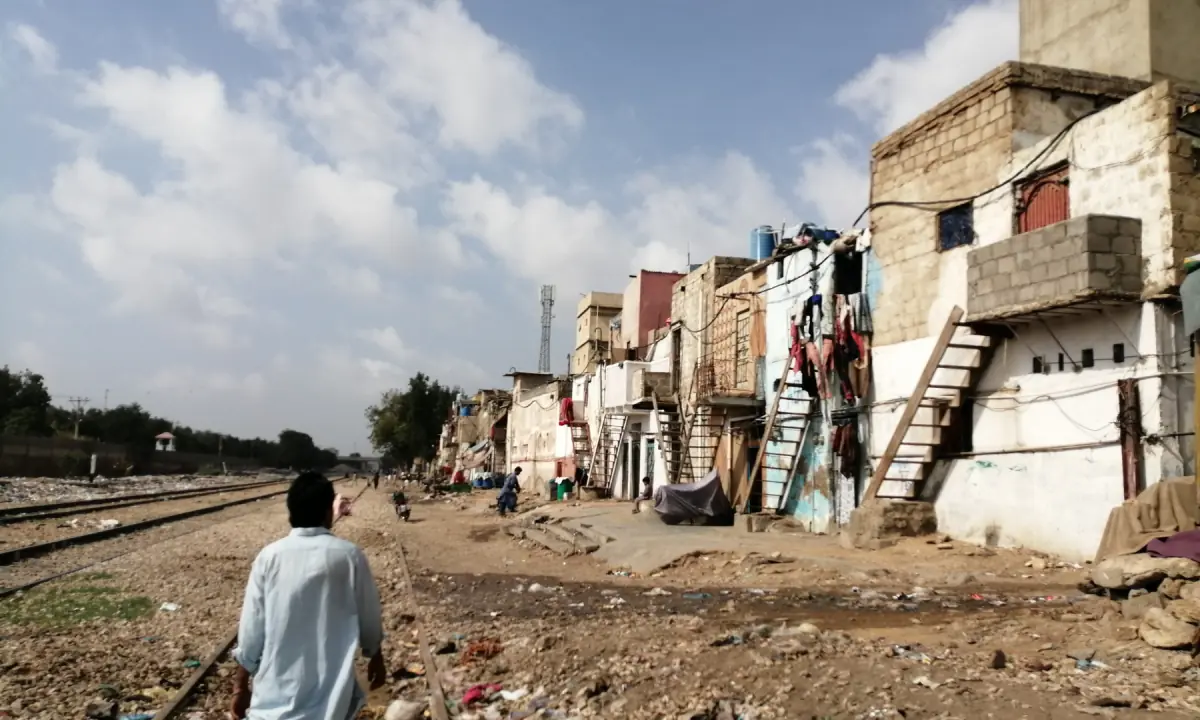
Nearly 15,000 residents in Karachi, Hyderabad, and Lahore could be displaced to make way for Pakistan's largest railway project, Main Line-1. This railway project, which will begin work in January, aims to upgrade a 1,726 km railway line that will serve three quarters of Pakistan's rail freight and passenger traffic. The project is funded by the China-Pakistan Economic Corridor (CPEC) and is expected to cost $6.678 billion, with two billion dollars in loans from the Asian Development Bank (ADB) for the Rohri-Karachi section.
The improvements include a double track, electrification, signaling, and increased speed from 160 kph to 160 kph. Despite these advancements, the project documents do not contain a plan to resettle the families living along the track. This displacement is a result of Pakistan's colonial Land Acquisition Act of 1894, which allows the state to acquire land for public use without requiring proof of ownership.
Many of those living in katchi abadis along the ML-1 corridor do not have official papers, as the sarkar has never recognized their shelters. This legally sanctioned method of displacement is still used today and has led to the seizure of homes and communities, undermining social ties, laws, and the economy.
Written by urgent.news from Dawn's reporting — not their text. Machine-written — may contain errors; check the original before relying on it.