The Drought Test Europe’s Nuclear Power Wasn’t Ready For
Record-low water levels on the Danube in the summer of 2026 exposed a critical vulnerability of nuclear power to climate change In late July 2026, the Danube fell to its lowest level on record, and near Budapest the water level dropped to about 30 centimeters — 28 centimeters below the previous record, set in 2018. The consequences for nuclear energy were immediate. Hungary's only nuclear power…
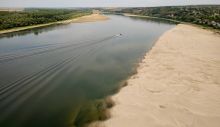
In the summer of 2026, Europe’s nuclear power faced a critical challenge: record-low water levels on the Danube exposed a vulnerability that climate change had brought to the forefront. Hungary’s Paks nuclear power plant, the country’s sole nuclear facility, cut its output to about 10% of normal levels, while Romania’s Cernavodă plant had to shut down one of its reactors.
This incident highlights the unexpected climatic limitation that nuclear energy must now contend with alongside geopolitical threats. Paks nuclear plant, located in Hungary, was operating with a single turbine and was just over 10% capacity, with the risk of a full shutdown looming within 72 hours if the river's level continued to drop.
This was reportedly the first time in the plant’s 44-year history that it came this close to a complete shutdown. The reduced output at Paks raised concerns about the grid’s stability during a heat wave and peak demand. In Romania, Unit 1 at the Cernavodă plant was taken offline and disconnected from the grid, while Unit 2 operated at roughly half capacity.
This vulnerability is not an isolated event; reactors require large volumes of water for cooling, and many plants were built based on historical hydrological patterns that are no longer guaranteed by a changing climate. As temperatures rise, warm, shallow water is less effective at cooling reactors, making this a fundamental problem rather than a temporary one.
The Danube, a crucial source of cooling water for nuclear plants, has been at its lowest level on record, exposing a structural constraint inherent in river-cooled nuclear power. This vulnerability highlights the irony that nuclear power, intended to reduce Europe’s dependence on Russian gas, now poses a new threat from climate change.
It underscores that energy independence cannot be achieved solely by diversifying gas suppliers; it also requires climate resilience. Europe’s previous energy strategy, which focused on reducing reliance on Russian gas, now faces a new reality as summers become hotter and drier. The EU’s water-resilience strategy, unveiled last year, was meant to prepare the economy for such shocks, but the Danube has already tested its limits.
The crisis at Paks and Cernavodă demonstrates that a reactor protected from gas supply disruptions can still be incapacitated by a river that is too shallow or too warm. Energy independence, therefore, must encompass climate resilience, not just supplier diversity, or else a system shielded from one threat may fall victim to another.
Written by urgent.news from UATV English's reporting — not their text. Machine-written — may contain errors; check the original before relying on it.