The American West Is Quietly Having a Terrible Fire Season
More land has burned so far this year than in any year in the past decade.
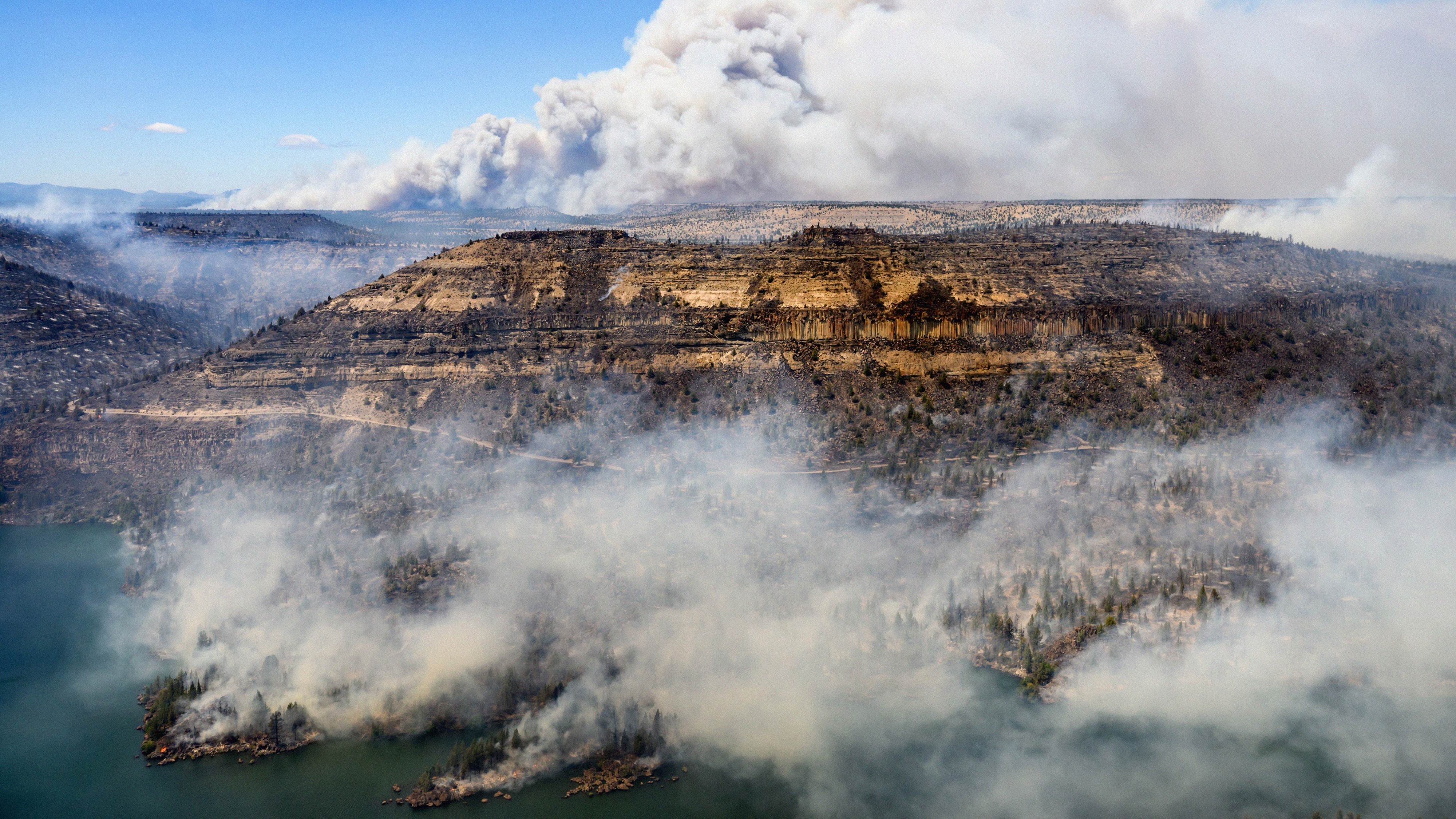
The year 2026 has witnessed an unprecedented fire season in the American West, with about 7.2 million acres burned, the largest area since 2012, according to data from the National Interagency Coordination Center. In Oregon, smoke has obscured the sun in the eastern part of the state, leaving behind devastation and blackened landscapes.
Fires in Jordan Valley, Oregon, have been burning since July 23 and are among the state's largest in recent history, spreading to Idaho and causing the worst air quality in the country. In Washington, the Spokane region has experienced entire neighborhoods flattened by fires, while three other fires, each 10 times larger, continue to burn across the state.
Daniel Swain, a climate scientist, noted that 2026 is not just a year of urban fire, as seen in California, but rather a year of rural fire in the American West. Back-to-back lightning strikes and extreme heat have fueled these fires, which have destroyed grazing land, crops, livestock, and fruit nearing harvest. Ranchers and government employees compare this year's fires to the devastating 1.9 million-acre fire season in Oregon two years ago.
Hotshot crews, skilled at battling fires, are in high demand due to the fires' location on rugged terrain without many roads. However, these crews cannot reach every fire, and ranchers have become the first responders. Independent, volunteer firefighting nonprofits known as RFPAs, operating in Oregon, Idaho, and Nevada, have stepped in to help fill this gap.
With so many fires burning simultaneously, government resources have been stretched thin, and firefighters have been working in 36-hour shifts with little rest.
Written by urgent.news from The Atlantic's reporting — not their text. Machine-written — may contain errors; check the original before relying on it.