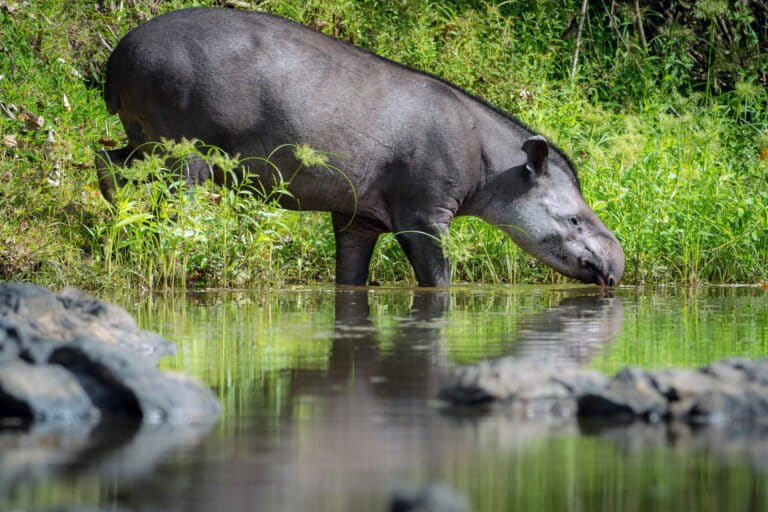
Tapirs, bats and nests: How plastic infiltrates Amazonian wildlife
At the mouth of the Amazon River, birds are already building blue nests out of discarded plastic.
MANAUS, Brazil — Microplastics infiltrate even the most remote corners of the Amazon, according to a recent study. Traveling up the Negro River from Manaus, it takes eight to nine hours to reach Anavilhanas National Park, a protected area preserving one of the world's largest freshwater archipelagos. Despite its distance from urban pressures, the park contains microplastics in its waters and the fish within.
A study found an average of 0.25 particles per liter of microplastics in Prato Lake, with fish averaging 3.3 particles each. About eight out of every ten fish contained microplastics, even though they inhabit a preserved area far from cities. The study's co-author, biologist Adalberto Val from the National Institute of Amazonian Research (INPA), explains that plastic's presence can be traced back to its origin.
Most of the particles found in the fish were made of polyamide, or nylon, along with fragments of other materials.
Written by urgent.news from Mongabay's reporting — not their text. Machine-written — may contain errors; check the original before relying on it.