South Korea’s Nuclear Dilemma
The debate over acquiring nuclear weapons continues in Seoul.
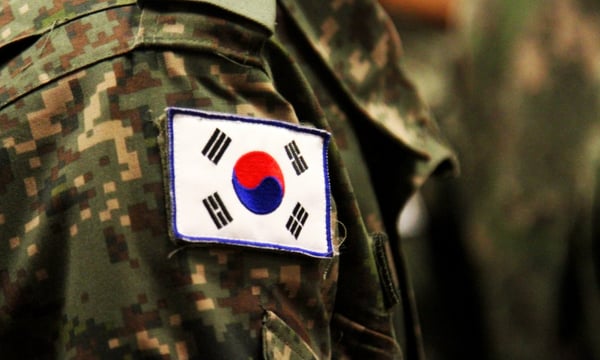
South Korea finds itself in a complex nuclear dilemma as global security structures undergo significant changes. With a major conventional war unfolding in Europe and the potential for armed conflicts in East Asia, the United States' perceived reliability as a security guarantor for its allies has diminished. This has led to a growing perception that nuclear powers lack a coherent understanding of their arsenals' purpose.
While strategic capabilities are being developed alongside conventional weapons, nuclear deterrence appears ineffective in preventing major conflicts, a situation Rose Goettemoeller has termed "The Strange Defeat of Nuclear Deterrence." South Korea, in particular, faces this dilemma as North Korea expands its nuclear arsenal and forges a strategic alliance with Russia, despite renouncing unification and branding South Korea as an enemy.
Public opinion in South Korea strongly favors the country acquiring nuclear weapons, with up to 80 percent of surveyed citizens supporting the idea. However, policymakers are more cautious, favoring a "threshold capacity" approach that would allow South Korea to quickly develop nuclear weapons without actually doing so while the alliance with the United States persists.
Strengthening nuclear deterrence on the Korean Peninsula can be achieved through various means, such as redeploying U.S. nuclear weapons in South Korea to signal a serious extended deterrence posture. However, this approach raises concerns about potential entrapment or abandonment, with the United States wanting to avoid being drawn into a nuclear conflict initiated by South Korea, while South Korea wants its deterrence to be effective without triggering an unwanted nuclear confrontation.
The intricacies of Chun In-bum's proposed scheme, which suggests South Korea would own a nuclear arsenal embedded in an integrated network of deterrence with the United States, highlight the difficulties in resolving the fundamental dilemma. If the United States maintains escalation control, it effectively holds a veto, while independent launch authority would place the United States in a nuclear conflict against its will.
The implementation of Chun's proposal or similar schemes may not adequately address the underlying issues and could have unintended consequences, including economic sanctions from China and potential military retaliation from Beijing.
Written by urgent.news from The Diplomat's reporting — not their text. Machine-written — may contain errors; check the original before relying on it.