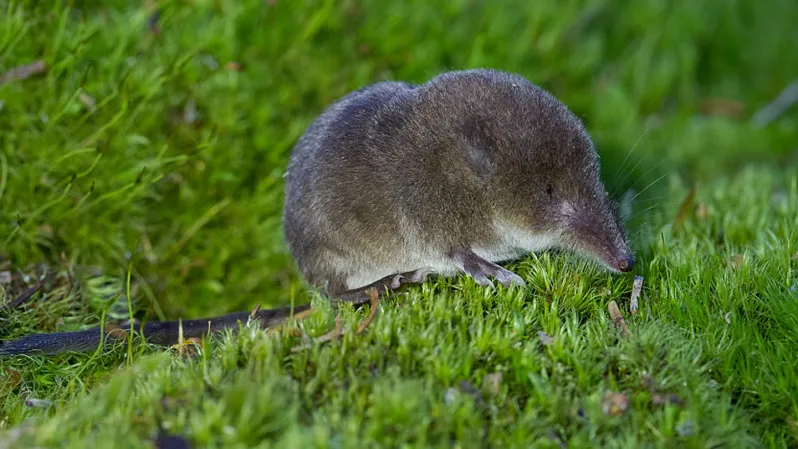
Shrews may grow bigger snouts in winter to cope with cold air, scientists say
Study of long-clawed shrew skulls from Japan shows that while skulls get smaller in winter, snouts elongate Humans turn to heated blankets and fluffy socks to cope with winter, but long-clawed shrews have a very different adaptation: they increase the size of their snouts. Researchers have previously discovered that certain small mammals, including the common shrew and European mole , reversibly…

A recent study of long-clawed shrew skulls from Japan has revealed that these small mammals undergo a unique adaptation to cope with winter conditions. While their skulls shrink in size, their snouts elongate, a phenomenon the researchers have termed the "reverse Dehnel's phenomenon." This discovery was made by examining 136 skulls collected in Hokkaido between 1948 and 1988, now housed at the Botanical Garden of Hokkaido University.
Dr Yugo Ikeda, the lead author of the research, explained that shrews collected during winter months had snouts that were 7% wider and 6% thicker than those collected in other seasons. This "true change" in bone structure involved a physical alteration of the snout's size. The researchers suggest that this adaptation may help shrews regulate body temperature by expanding the nasal cavity, creating more space for a rich vascular network that warms cold air before it reaches the brain.
This could enable the shrews to maintain core cognitive functions in freezing temperatures. Additionally, the expanded nasal cavity may improve the shrews' ability to detect prey, such as earthworms, during scarce food periods. The researchers propose that similar seasonal changes in snout size could occur in other shrew species found in Hokkaido, and they plan to investigate this further in future studies.
Written by urgent.news from Guardian Science's reporting — not their text. Machine-written — may contain errors; check the original before relying on it.