Public Protector highlights systemic failures in student financial aid management
An investigation by the Public Protector has uncovered systemic deficiencies in the National Students Financial Aid Scheme, revealing over R5.1 billion in improper funding affecting more than 40,000 students across 76 institutions.
More than 40,000 students at 76 universities and colleges were improperly funded by about R5.1 billion, a Public Protector investigation found. The Special Investigating Unit (SIU) under Proclamation R88 of 2022 reported the findings to Parliament's Standing Committee on Public Accounts. The SIU identified students across 76 higher education institutions who had been improperly funded, with recoveries exceeding R2 billion.
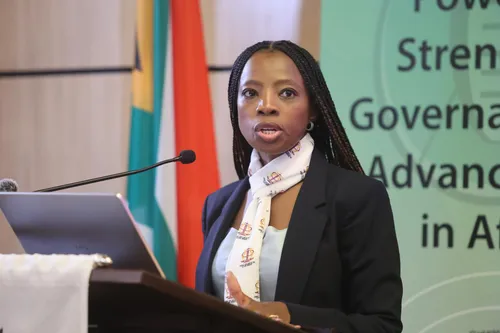
Public Protector Advocate Kholeka Gcaleka's investigation into the National Students Financial Aid Scheme (NSFAS) was prompted by complaints about administrative deficiencies affecting students' access to financial aid. The SIU examined NSFAS, the Department of Higher Education and Training (DHET), institutions of higher learning, and other sector role players.
Gcaleka said the investigation began after complaints about the challenges in accessing funding, inefficiencies in the funding mechanisms, issues with student accommodation, funding criteria, and delays in disbursement of funding allowances.
The investigation highlighted systemic deficiencies in the administration, governance, funding, coordination, and oversight of student financial aid. NSFAS suffered from persistent governance instability, administrative weaknesses, inadequate systems, and delayed funding decisions. These issues caused prejudice for students, including food insecurity, accommodation instability, and exposure to unsafe living conditions.
NSFAS's limited accessibility, centralized Cape Town-based walk-in service, and ineffective query-resolution arrangements at the institutional level were also identified as contributing to the problem.
The investigation found that NSFAS struggled to implement reforms aimed at expanding student funding, including support for the so-called "missing middle." Despite receiving 43,261 applications from eligible students, NSFAS could not roll out the funding due to the need for a new loan system. Additionally, NSFAS was unable to resolve 80% of queries received through its contact centre, as they had to be escalated to internal units.
The investigation also revealed that the Close-Out Project, intended to reconcile financial data between NSFAS and tertiary institutions, remained incomplete. This project had begun in 2021 and prevented students from obtaining their certificates due to unresolved tuition accounts.
Written by urgent.news from IOL's reporting — not their text. Machine-written — may contain errors; check the original before relying on it.