On That Disgraceful, Disreputable, (Wonderful) Form of Punctuation: The Parenthesis
Shakespeare and friends would call punctuation “distinctions,” according to the Latin tradition, or “pointing,” because of the medieval practice of placing dots or points at different levels of the line. The first occurrence of the word “punctuation” happens in the French dialogue
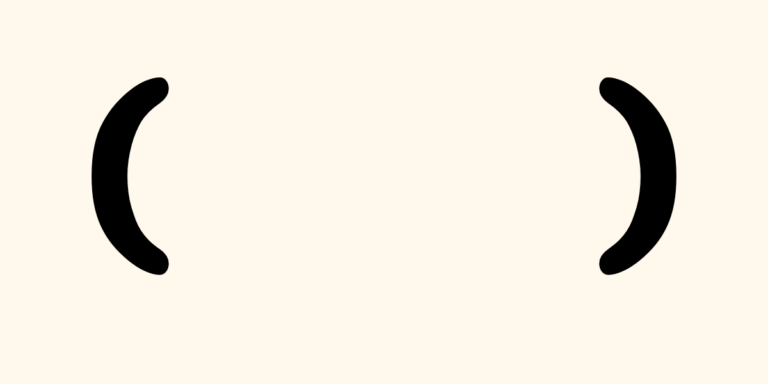
For those who view punctuation as mere distinctions or points, the parenthesis holds a special place. Its origins trace back to medieval practices of dotting lines and the French dialogue book Orthoepia Gallica from 1593, penned by John Eliot. Eliot's creative use of punctuation and rhetoric, a source of inspiration for Shakespeare, showcased how punctuation could delve into technology, gender, and social concerns.
Punctuation also served as a means to explore the interior worlds of the mind, memory, and emotions. However, in a society that valued eloquence above all, writers became increasingly interested in depicting the failure of speech rather than its fulfillment.
Sidney's use of the parenthesis mirrored the power of writing to subvert itself, even as it conveyed urgency. His premature death at the age of thirty-one, in a manner that echoed his writing, added a mysterious dimension to his work. The Abracadabra of brackets, as Sidney called them, left a lasting impact on literature. Sidney's Arcadia, a work filled with drama, disguises, poetry, and love triangles, was unfinished at his death.
This left a void that countless later writers eagerly filled, using Sidney's innovative punctuation as a springboard for their own interpretations. Despite the various versions and edits of Arcadia, the brackets remained consistent, a testament to Sidney's mastery of the parenthesis.
Written by urgent.news from Literary Hub's reporting — not their text. Machine-written — may contain errors; check the original before relying on it.