Ocean Freight Rates Surge +400% — But Demand Isn’t Driving It
Ocean freight spot rates have skyrocketed by over 400%, but surprisingly, demand isn’t the primary cause. This SONAR Update breaks down how capacity control and strategic blank sailings by concentrated ocean carriers are driving prices. Plus, we dive into the state of trucking tender rejections, rising operating costs, and the shift towards a more regulated […] The post Ocean Freight Rates Surge…
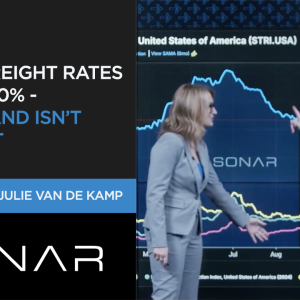
Ocean freight spot rates have surged by more than 400%, but demand isn't the driving force behind this dramatic increase. According to a SONAR Update, the rise in prices is primarily due to capacity control and strategic blank sailings by prominent ocean carriers. In addition to soaring rates, there are issues like trucking tender rejections, rising operating costs, and a more regulated environment.
Despite a slight decline in cargo volumes out of China to the U.S. (down roughly 1%), the China-to-U.S. East Coast rate has reached $9,400 per TEU, with West Coast rates also experiencing significant gains since early August. This stark contrast between flat-to-negative demand and surging prices indicates that supply-side management by ocean carriers is the key factor, not a freight boom.
The top 10 ocean container lines control around 90% of global container shipping capacity, far exceeding OPEC's roughly 36% share of global oil supply. Importantly, these carriers are not subject to U.S. antitrust law, allowing them to legally coordinate sailing schedules and remove capacity from the market through blank sailings and slow steaming. This enables them to retain pricing power and justify the high rates.
Recent financial reports, including Yang Ming's, highlight a 482% profit surge, partly attributed to an early peak season and firmer freight rates. However, this dynamic is facing potential volatility due to trade policy uncertainty, geopolitical disruptions in the Red Sea, and the expectation of vessel supply additions outpacing demand growth.
Ocean carriers are also leveraging environmental and weather factors, such as El Niño-induced typhoon activity and reduced water levels in the Panama Canal, to justify capacity restraint. Julie Van de Kamp, an expert, emphasized that "No crisis left untouched."
This situation reflects a significant shift from an era where ocean carriers fought for market share to a current focus on defending profitability. According to Van de Kamp, "It's no longer about he who has the most ships win; it's who has the highest profitability." Shipments planning for fourth-quarter freight budgets should be prepared for continued turbulence, with port delays increasing due to weather disruptions.
With blank sailings maintaining tight capacity and carriers' motivation to sustain elevated rates, expect volatility in rates and available capacity through the end of the year.
Written by urgent.news from FreightWaves's reporting — not their text. Machine-written — may contain errors; check the original before relying on it.