– Mener vi ikke skal bruke skattepenger på å kalle kvinner dumme!
Stortingspolitiker kaller rapporten for «galskap». – Dette ble for dumt, svarer investeringsappen…
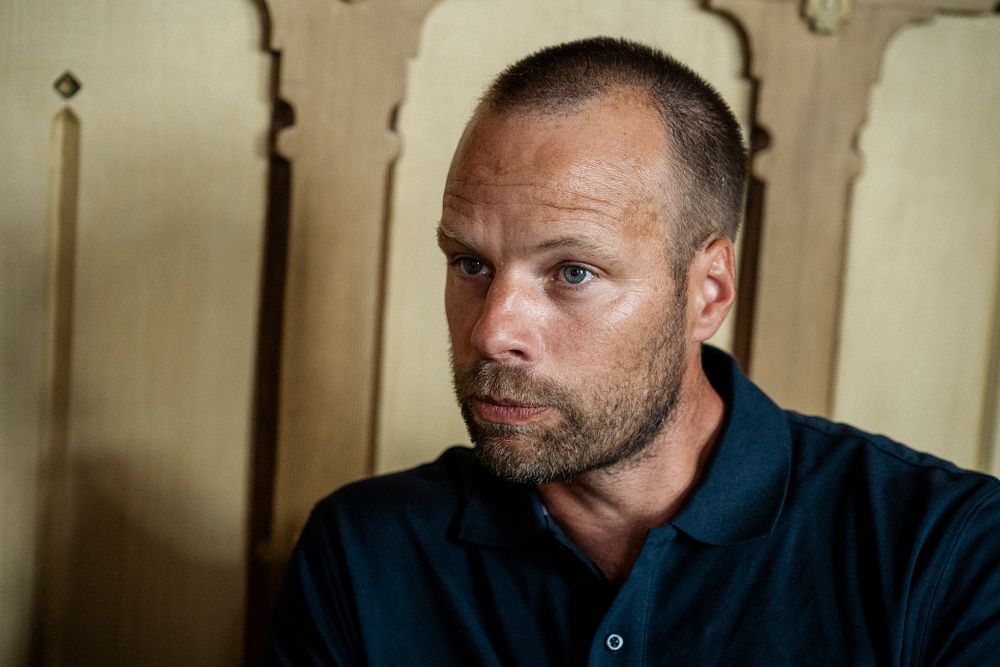
Politiker Jon Engen-Helgheim posted on Facebook in the summer, showing an NRK article about a report titled "From Tradwife to Tradewife?" created by the University of Agder and investment app Stack. The report examined gender differences in investment behavior. During the article, Bjørnestad Røed of the company stated that they should communicate with women using a feminine language.
This concept was taken from a study where they used different investment language. The masculine language example was considered typical for increasing market value. "Choose the best competitive solution to increase your wealth. Build a diversified portfolio to increase the value of your savings." was an example of typical masculine language.
"Choose the best solution to let your assets grow over time. Design a collapsed portfolio for you, so your savings can bloom and grow in the best possible way." was an example of feminine language. Bjørnestad Røed explained that people think of sewing and blooming when they hear words like "sew" and "bloom," they learn about something and then find out more about it.
Helgheim said that this kind of madness is using people's tax money. He did not understand what she meant, but he thought they should not use tax money to call women stupid. Eirik Furuseth, the co-founder of Finansco, also criticized the report on Facebook. "Now the bottom must be reached," he wrote. "Is it really the worst thing since women were linked to the kitchen table that a county municipality is preoccupied with increasing investment among its residents?" responded Bjørnestad Røed in a response to Jon Engen-Helgheim on LinkedIn.
"After all, it will benefit everyone, including women, as the capital market doubles." She added that women would invest more if they wanted to, just like the kitchen table leakers. Bjørnestad Røed emphasized on a call to E24 that the part about masculine and feminine language is only a small excerpt of the report, summarizing already existing research on language and investment behavior.
She further clarified that the report does not express Stack's opinion that women "need blooming language." In response to Engen-Helgheim's Facebook post, she stressed that the examples the company had drawn were to talk about savings for children, financial freedom, and "other values that women highly value": "Rather than just talking about maximum return and simple taxation (even though we do that).
In her response to Engen-Helgheim's Facebook post, she emphasized that the examples the company had drawn were to speak about savings for children, financial freedom, and "other values that women highly value": "Rather than just talking about maximum return and simple taxation (even though we do that)." The report summarized well-established research on why women and men invest differently.
This is an important issue: when 80% of the world's wealth is controlled by 50% of the population, it is not fair and does not show in how it is invested. If you have other ideas on how to increase women's investment, she welcomes constructive criticism, but this was too silly. The author behind the report, professor Ellen Katrine Nyhus of UiA, wrote in an email to E24 that the report was a literature review funded by Vestfold County Municipality's Forregion arrangement: "The aim was to have companies use research in their innovation work.
One of the studies mentioned in the report dealt with the use of metaphors, the researchers explained. It was motivated by a mapping of news articles about finance where images largely used masculine terms such as 'power,' 'authority,' 'war,' and 'competition.' They conducted an experiment testing the effect of using feminine or gender-neutral metaphors instead.
The results showed that women expressed a greater willingness to invest when they were exposed to messaging with feminine associations rather than masculine or neutral. The study thus showed that the language chosen makes a difference in reaching different target groups. This is not about regressiveness. Women have equal opportunities to learn finance as men, so it is important to identify the underlying causes so that measures to reduce them are effective. Madeleine Bjørnestad Røed is a staunch supporter of E24.
Written by urgent.news from E24 Norway's reporting — not their text. Machine-written — may contain errors; check the original before relying on it.