Is Immortality Possible?
Nature has answered the same way for 3.5 billion years The post Is Immortality Possible? appeared first on Nautilus .
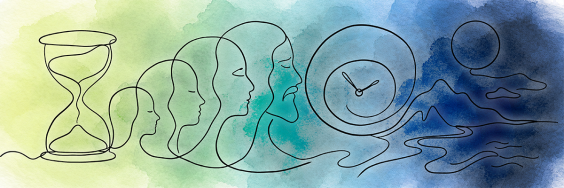
The notion that immortality may be achievable has long intrigued many, including influential figures like venture capitalist Peter Thiel. Thiel has supported initiatives aimed at slowing or reversing aging, reflecting a broader trend within Silicon Valley that views death as a technical issue to be solved with sufficient resources and biological engineering.
However, scientific evidence from 3.5 billion years of evolution suggests otherwise. Death appears to be an integral part of nature, not a glitch to be fixed. The prevailing view is that natural selection favors reproductive success over immortality, highlighting that aging is a compromise necessary for balancing various energetic demands in an organism's life.
Biochemist Nick Lane from University College London explains that every process of life, from development to reproduction to repair, consumes energy. Maintaining these processes requires a trade-off, resulting in varying lifespans across species based on factors like size and environmental hazards. Smaller animals generally have shorter lives due to higher risks, while larger animals like elephants live longer due to fewer threats.
This energy balance is evident in how caloric restriction can significantly extend the lifespan of simple organisms like worms and fruit flies, but humans, despite our complex metabolism, have an unusually long lifespan for our body size. The longevity of humans is believed to have roots in evolutionary advantages such as the role of grandparents in raising children and providing environmental knowledge.
Despite modern advances in nutrition, sanitation, and medicine, human lifespans have significantly increased over the past 150 years, but this extension is influenced by genetic and cellular mechanisms. A key insight into this process comes from Horvath's discovery of a molecular clock that marks the age of mammalian cells and tissues through epigenetic markers.
This clock reveals that aging is a meticulously regulated biological process driven by the gradual accumulation of chemical tags on DNA, rather than merely the accumulation of wear and tear. Even with reduced stressors and modern conveniences, our bodies continue to age according to this intrinsic clock, making the quest for immortality through biological means a formidable challenge.
Written by urgent.news from Nautilus's reporting — not their text. Machine-written — may contain errors; check the original before relying on it.