Hydrogen-powered 'rocket car' tops 400 mph in record-breaking test (video)
The JCB Hydromax vehicle averaged more than 400 mph during two runs in Utah last week, becoming the fastest hydrogen-powered car in history.
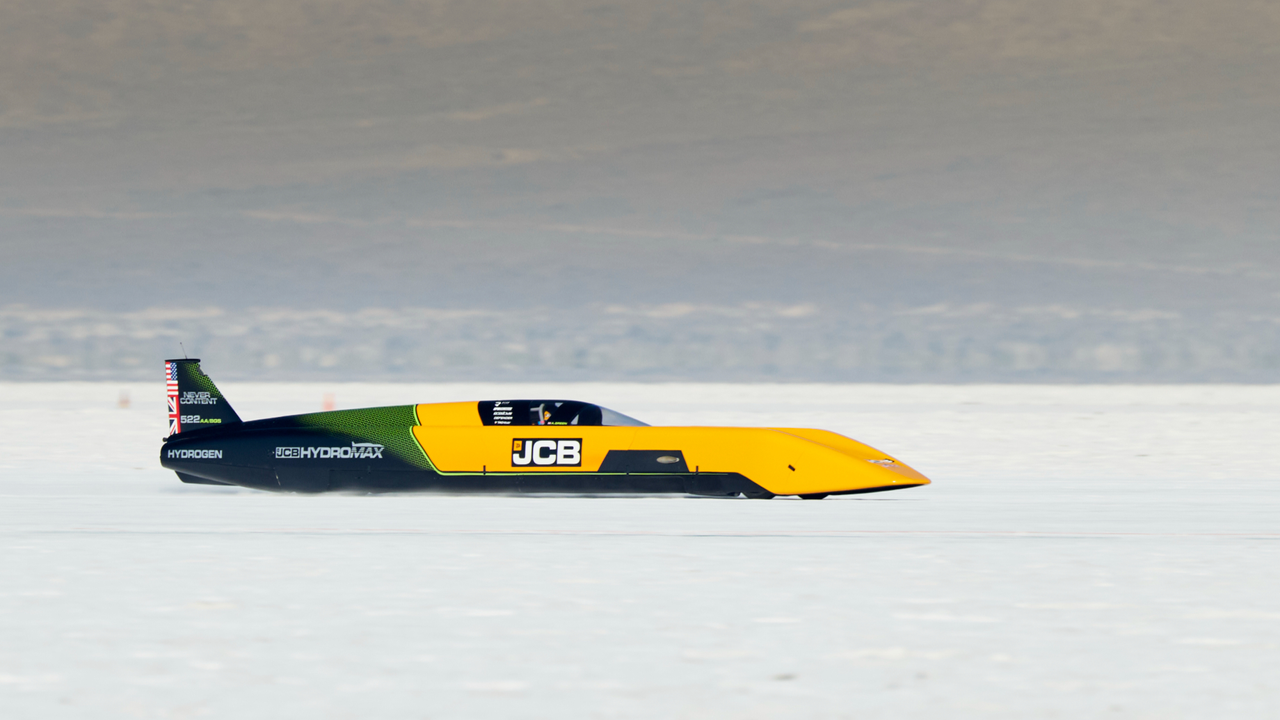
A hydrogen-powered rocket car named JCB Hydromax has set a new land speed record at the Bonneville Salt Flats in Utah, reaching speeds above 400 mph (644 kph). Wing Commander Andy Green, a British Royal Air Force veteran, piloted the vehicle on two separate runs on August 11, achieving speeds of 400.623 mph (644.740 kph) and 412.135 mph (663.267 kph). The average speed of the two runs was 406.320 mph (653.909 kph), marking the fastest speed ever attained by a hydrogen internal combustion engine.
Green expressed his excitement about the record-breaking drives, stating that anything above 350 mph (563 kph) would have been considered a success. The hydrogen engine performed better than expected and surpassed the previous hydrogen speed record, which stood at 303 mph (488 kph). This new record demonstrates the potential of hydrogen-powered engines on land, as they produce no carbon dioxide emissions.
Although the JCB Hydromax is not designed for space travel, it shares similarities with actual rockets in terms of performance and preparation, such as the need for a countdown and checklist. The hydrogen engines, while powerful, are not intended for space propulsion, as they typically produce around 74 horsepower. These engines are primarily used in the construction industry to showcase their capabilities and adaptability.
Written by urgent.news from Space.com's reporting — not their text. Machine-written — may contain errors; check the original before relying on it.