Huanggang Port points to the future of Greater Bay Area travel
The much-anticipated revamped Huanggang Port, expected to open later this year, should be seen as more than a story about faster clearance. Its deeper significance lies in a question that deserves wider discussion: if border functions can be redesigned, where should border control actually operate? Living in the Greater Bay Area, where people and businesses move across administrative boundaries…
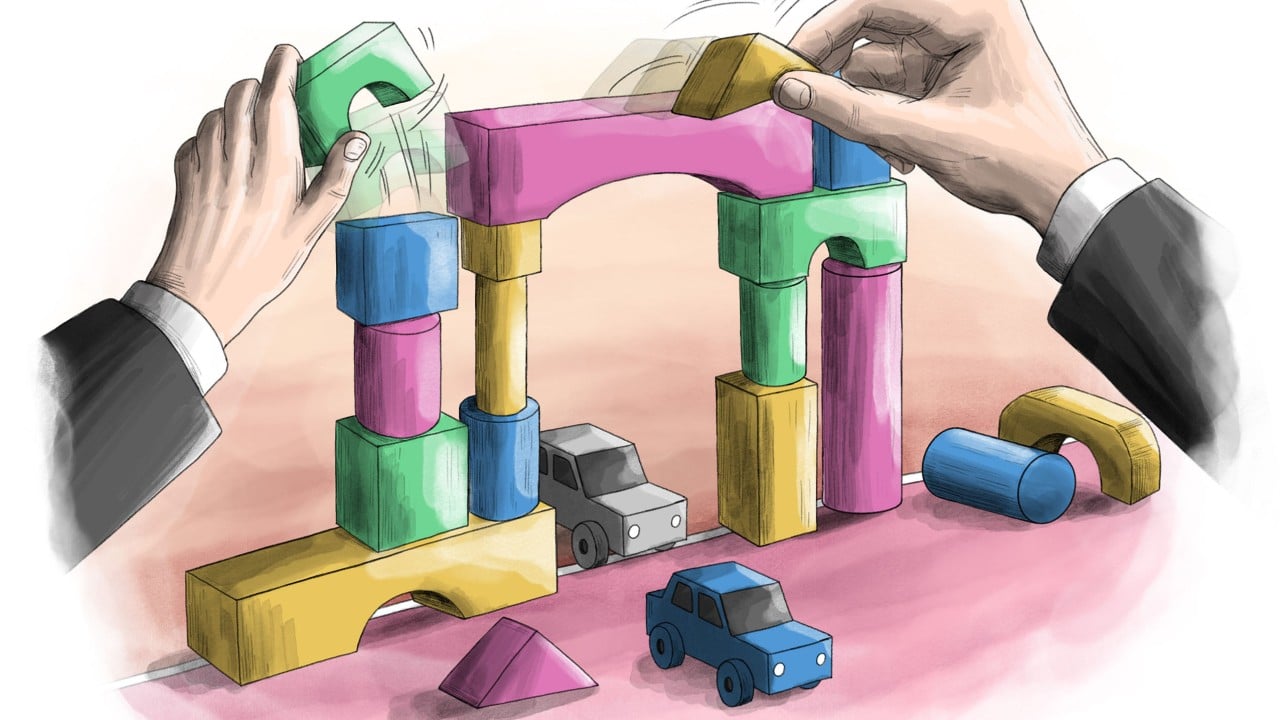
The revamped Huanggang Port, slated for opening later this year, symbolizes more than just a faster clearance process. It marks a deeper shift in how border control can be structured, sparking important discussions about the nature of borders in the Greater Bay Area. In a region where people and businesses frequently cross administrative boundaries, traditional notions of borders as mere lines separating places have evolved.
Rather, borders now encompass a complex system of procedures, facilities, and decisions that govern movement across administrative lines.
Historically, border crossings were centered on separation, with travelers passing through checkpoints on one side and then moving to checkpoints on the other. This spatial model of borders, however, is being reimagined. The previous West Kowloon Station, with its high-speed rail link opening in 2018, offers an early example of this shift.
By integrating mainland immigration and customs facilities inside a bustling urban transport hub, the station demonstrated that border functions could be brought into the heart of a city, rather than confined to isolated checkpoints.
The new Huanggang Port border crossing takes this concept further by relocating both Hong Kong and Shenzhen’s clearance facilities into a single building in Shenzhen. While the physical boundary remains unchanged, the organization of border functions has transformed. This change is not merely about speeding up the clearance process from approximately 30 minutes to an anticipated five minutes.
Rather, it represents a conceptual shift in how borders are managed. Border management no longer needs to adhere to a rigid spatial model, but can be restructured through cooperation between neighboring cities and by designing infrastructure around actual travel patterns.
The implications of this new approach are far-reaching. Consider the Hong Kong-Zhuhai-Macau Bridge, a complex structure connecting three cities and serving diverse modes of transportation. The bridge itself rarely appears as the main obstacle to movement; rather, the pressure arises at the border facilities where multiple procedures converge at a single location.
Traditional border checkpoints can become bottlenecks, interrupting the flow of vehicles. However, the lessons from West Kowloon and Huanggang suggest a new possibility: border functions may not be confined to a single checkpoint in the future.
With the advent of advanced declarations, digital monitoring, and risk-based management, it is conceivable that certain border procedures could be organized at different points along a journey, including designated locations along the transport network. This flexibility would allow for a more efficient and streamlined movement of vehicles, without sacrificing the importance of border controls.
While it is not advocating for the complete elimination of border checks, the goal is to reevaluate where border management should take place. Should border functions remain tied to a single physical point, or can they be integrated into a more flexible system that adapts to actual patterns of movement?
This question resonates deeply with Hong Kong's own experience. For decades, Hong Kong's competitiveness has hinged on its ability to connect with the world while effectively managing one of Asia's busiest international gateways. As a global city known for its openness and extensive international connections, Hong Kong has developed considerable expertise in navigating the movement of people, capital, and ideas across borders.
The Greater Bay Area's increasing connectivity presents a unique opportunity for Hong Kong to expand its economic hinterland and bolster the foundations of its future prosperity.
In an era where borders are often perceived as barriers and sources of restriction, Hong Kong's experience suggests that effective border management can be a tool for fostering openness and security. By rethinking where border functions should be located and how they can operate within a broader system of regional exchange, Hong Kong can continue to play a pivotal role in the evolving landscape of the Greater Bay Area.
The Huanggang Port is not just a symbol of faster travel; it is a testament to the potential for borders to evolve and adapt in the service of regional cooperation and growth.
Written by urgent.news from South China Morning Post - Hong Kong's reporting — not their text. Machine-written — may contain errors; check the original before relying on it.
This story
This is one outlet's version. Read the fullest account.