How has a famous group of 2,000 year-old Chinese rock paintings remained so vibrant? Because it was made with blood, new research says
Murals at Unesco World Heritage Site Zuojiang Huashan in southern China were made using animal blood and blood from childbirth, according to researchers
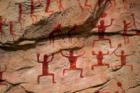
A recent study by researchers at Shandong University suggests that the vibrant red murals found in China's Zuojiang River Valley have remained so well-preserved due to the inclusion of blood in the pigment. The murals, estimated to be from the fifth century BC to the second century AD, depict figures engaged in what may have been an ancient fertility rite, including naked individuals wearing feather headpieces and playing drums and bells.
The blood used in the paint is believed to have come from animal sources and possibly from human childbirth. The research, set to be published in the Journal of Archaeological Science, utilized infrared, x-ray, and proteomics technologies to analyze the rock art fragments from three of the more than 80 sites in the Huashan rock art belt.
The team discovered that a red clay containing nano-hematite was used as the pigment, while a composite mortar made from lime and blood served as the binder. The blood proteins helped form a stable organic-inorganic composite bonding system, which tightly encapsulates the nano-hematite and strongly bonds to the limestone, explaining the longevity of the murals in the hot and humid subtropical monsoon zone where they are located.
Written by urgent.news from The Art Newspaper's reporting — not their text. Machine-written — may contain errors; check the original before relying on it.