Global bond yields surge as debt fears test bitcoin’s hedge narrative
Long-term borrowing costs are reaching multi-decade highs as U.S. debt approaches $40 trillion and AI hyperscalers accelerate bond issuance.
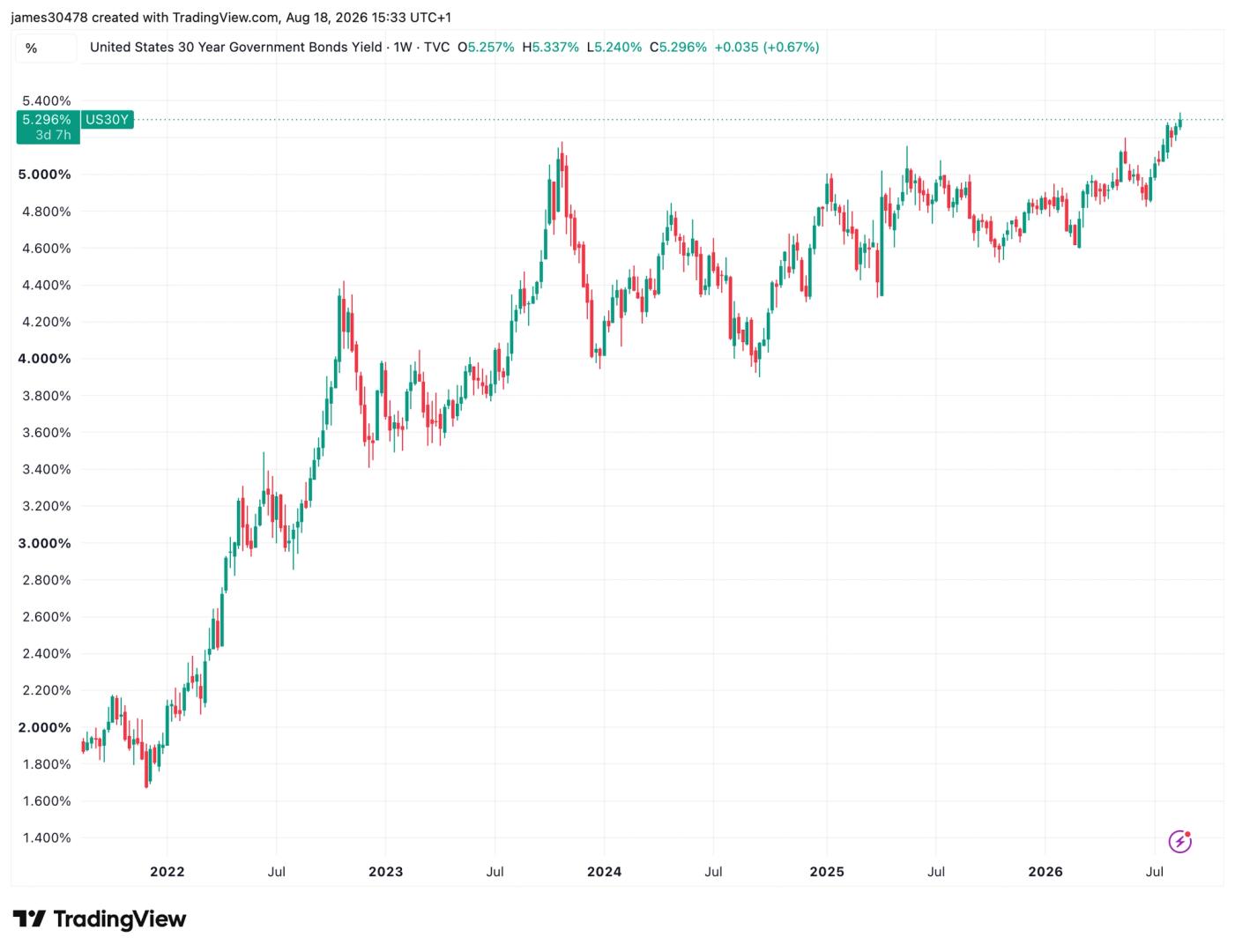
Long-term government bond yields are reaching unprecedented levels due to a surge in debt issuance and concerns over sovereign finances, as the U.S. government's debt approaches $40 trillion. The 30-year U.S. Treasury yield has hit 5.33%, the highest since 2007, while the U.K. gilt yield nears 6%. French and Japanese borrowing costs have also hit all-time highs.
TLT, an ETF tracking long-duration U.S. Treasuries, hit an all-time low of $81.35. Oil prices remain elevated, with WTI crude trading above $84 a barrel. Despite this, inflation expectations for five and ten-year periods remain stable. Investors are now focusing on debt supply and refinancing risks associated with the expansion of AI infrastructure.
Hyperscalers have issued $159 billion of bonds in 2026, a 47% increase from the previous year, to fund AI infrastructure projects. Goldman Sachs predicts total issuance will reach $400 billion this year. Higher yields could potentially divert capital from speculative assets like crypto and risk assets. Gold, which generates no yield, has gained 10% this month, indicating some investors may view the bond selloff as a loss of confidence in sovereign fiscal credibility.
Bitcoin, meant to serve as a potential hedge, has underperformed for nine months and is currently trading just above $64,000.
Written by urgent.news from CoinDesk's reporting — not their text. Machine-written — may contain errors; check the original before relying on it.