Earth's Organisms Developed Via Evolution. Some Theorists Wonder: What if the Entire Cosmos Did, Too?
The idea that universes evolve like organisms sat on the fringes of theoretical physics for decades. Then, a Substack post and a 2022 find by the James Webb Space Telescope boosted the concept
In Daniel Dennett's 1996 book Darwin’s Dangerous Idea, the philosopher argues that evolution may be the greatest concept ever conceived, surpassing the likes of Newton and Einstein. While Dennett sees evolution as a "universal acid" reshaping our understanding of complexity in nature, some physicists question whether the theory can extend to the cosmos.
Proponents of "cosmological evolution" claim that the universe, like living organisms, evolves and reproduces, spawning new universes with minor variations. This perspective contends that universes, akin to biological life, develop and optimize over generations to maximize the potential for additional universes to emerge. Julian Gough, an Irish author, has championed this idea of cosmological evolution through his Substack blog, The Egg and the Rock, where he explores the notion that the universe is not a static rock but an evolving entity.
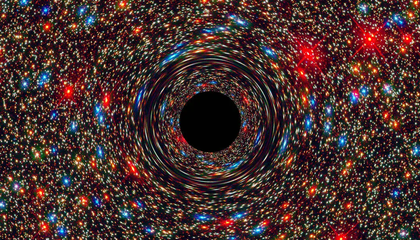
This concept stems from the Big Bang, which scientists believe set the universe on an unprecedented path of increasing complexity—from dense gas to galaxies and planets, culminating in the emergence of biological life on at least one celestial body. Gough's exploration of evolution beyond biology led him to the work of Lee Smolin, who proposed that the universe evolves through the creation of black holes, which act as cosmic factories for spawning new universes.
Smolin's ideas, published in 1992 and 1997, have not gained widespread acceptance, but they remain a thought-provoking alternative to the conventional view of a static universe.
Written by urgent.news from Smithsonian's reporting — not their text. Machine-written — may contain errors; check the original before relying on it.