Drive for Nuclear Power Boosts Uranium Industry — And Tribal Health Concerns in Southwest
Federal efforts to revive uranium mining in the West and decrease reliance on Russian uranium are raising concerns about drinking water for tribal communities reckoning with the industry’s deadly legacy.
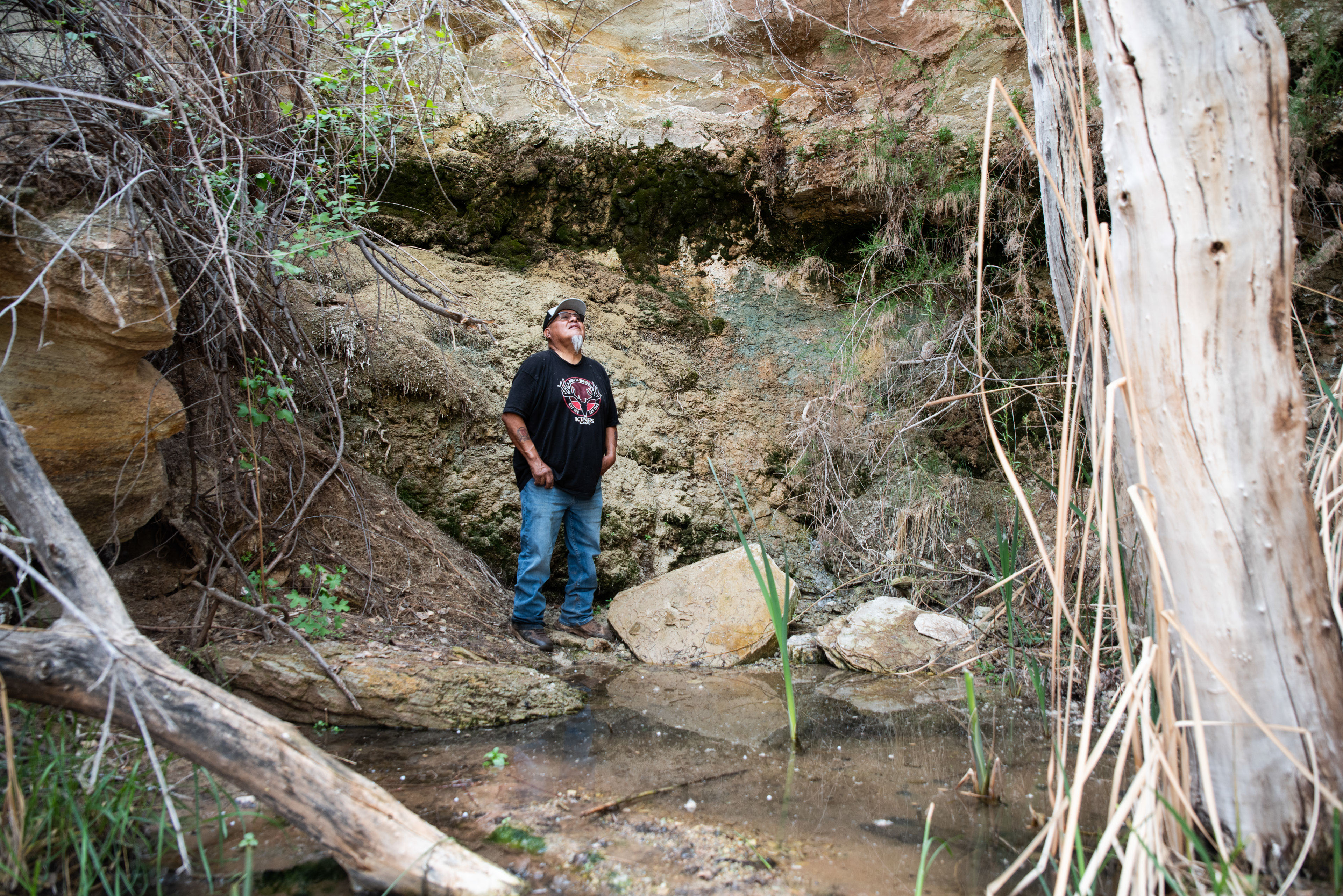
White Mesa, Utah - Atop a hot April day, Malcolm Lehi navigated his Jeep Wrangler across a rugged dirt path, past junipers and sagebrush, seeking Entrance Spring on land traditionally held by his Ute Mountain Ute tribe. The refreshing spring, shielded by moss, lies just off the highway from White Mesa Mill, the sole conventional uranium mill in the nation.
For decades, this facility has ignited debate over possible radioactive contamination, which may infiltrate both the water and air. These worries are particularly intense in the White Mesa Ute Community, home to approximately 200 tribal members, who reside around five miles south of the facility.
State regulators and the mill's owner, Energy Fuels, assert that any pollution linked to the mill is contained. This assurance provides little comfort to nearby tribal residents, who, cognizant of uranium's deadly past across the Colorado Plateau, have voiced concerns about the potential dissemination of toxic waste. Many no longer drink the local water, opting for bottled alternatives instead.
The tribe's concerns have gained renewed urgency as the U.S. endeavors to revive its domestic uranium production. In 2024, federal legislation prohibited the importation of Russian uranium by 2028, intensifying the drive for domestic fuel sources. President Donald Trump aimed to scale up U.S. nuclear energy capacity by four times by 2050, issuing directives to prioritize mining on federal lands and expedite approval procedures.
However, achieving Trump's objective appears challenging, as constructing reactors is cumbersome and frequently meets local resistance, according to David Hart, a senior fellow for climate and energy at the Council on Foreign Relations. Nonetheless, the demand for uranium is surging due to the rise in data centers and electricity consumption, prompting a greater interest in nuclear power as a low-carbon energy source.
Consequently, the pursuit of uranium has commenced. The White Mesa Mill, constructed in 1980 near what is now Bears Ears National Monument in southeastern Utah, stands as a central figure in this ongoing uranium boom and the discord between tribal concerns and national economic interests.
The mill, situated near the former site of Bears Ears National Monument, receives an average of 10 to 15 trucks daily, each carrying uranium ore from regional mines, like one near the Grand Canyon inhabited by the Havasupai Tribe. The ore then traverses the Navajo Nation before reaching the mill, which anticipates expanding its waste storage capabilities.
Malcolm Lehi, a former tribal council member and part of a growing opposition led by the Havasupai and Navajo (Diné) tribes, is deeply concerned about the potential for toxic wastewater from uranium mining and milling to seep into groundwater and jeopardize the drinking water of future generations. The White Mesa Mill, a mere five miles north of White Mesa, has witnessed a resurgence in business since a quiet 15-year period, according to Curtis Moore, senior vice president of marketing and corporate development at Energy Fuels, which acquired the facility in 2012.
The mill currently produces 1 million pounds of yellowcake annually, with plans to double that output this year. The mill has also broadened its processing operations to encompass radioactive waste from Estonia and Japan, and secured a $725 million conditional loan commitment from the Defense Department to augment its domestic processing of rare earth elements.
Approximately half of the mill's 105 employees are Indigenous, with only two workers belonging to the Ute Mountain Ute Tribe.
Moore acknowledged the tribes' justified skepticism, acknowledging past instances of deceit. The Ute Mountain Ute Tribe's Environmental Programs Director, Scott Clow, highlighted the historical contamination from mining operations, but insisted that current safety measures significantly reduce worker radiation exposure and maintain an "effectively zero" radiation risk outside the mill. Despite these assertions, tribal members remain vigilant, wary of the potential for toxic waste to infiltrate their water supply.
Written by urgent.news from KFF Health News's reporting — not their text. Machine-written — may contain errors; check the original before relying on it.