Do Monkeys Keep Pets? Study Finds Widespread Primate Interactions With Other Animal Species, From Mice to Deer
This social behavior might reveal the evolutionary roots of traits that underlie pet-keeping in humans, scientists say, from caregiving to tolerance and curiosity. But it's not the same as a person keeping a cat or a dog
A recent study has revealed that many primates form close interactions with other animal species, ranging from mice to deer. The research, led by University of Oxford evolutionary biologist Cyril Grueter, involved a review of 427 cases documented in scientific papers, media reports, and a global survey of 37 primatologists. The interactions, which included play and grooming, occurred both in the wild and in captivity and involved 88 primate species interacting with 127 different species, some of which were also primates.
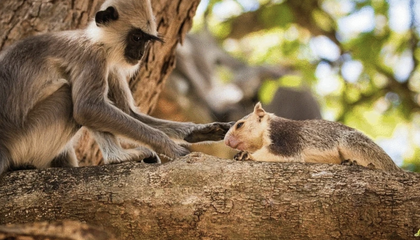
Grueter's team observed various interactions, such as a young male bonobo carefully cradling a mongoose pup, monkeys climbing onto the backs of pigs, and a tufted gray langur stroking a squirrel. In some cases, primates groomed and rode on the backs of deer, even attempting to mate with them. These behaviors indicate a common occurrence of primates treating other animals with gentleness and care.
However, not all interactions were friendly. The researchers identified 26 instances of abusive behavior, such as a male baboon in Saudi Arabia allegedly kidnapping and carrying a domestic puppy for extended periods. Additionally, 13 cases involved the death of the other animal due to violent handling by primates.
Based on the findings, the researchers suggest that these cross-species relationships may be evolutionary precursors to pet-keeping behavior in humans. While these relationships are not equivalent to human-animal companionship, they reveal deep-rooted behavioral capacities in primates, such as curiosity, tolerance, caregiving, and maintaining long-term relationships with other species. Further research is needed to explore these interactions from the perspective of the other species involved.
Written by urgent.news from Smithsonian's reporting — not their text. Machine-written — may contain errors; check the original before relying on it.