Cyberbullying among South African teenagers: A study on its impact on mental health and academic performance
Nearly two-thirds of South African teenagers in top-tier schools experience cyberbullying, which significantly undermines their mental health and academic success. This groundbreaking study reveals alarming statistics and insights into the emotional toll of online harassment.
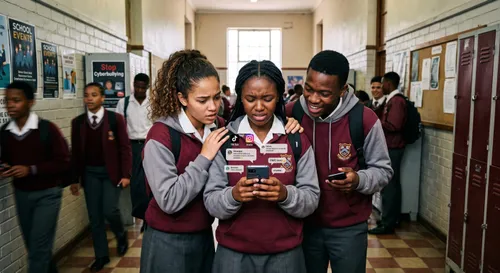
A recent study published in the South African Journal of Information Management reveals that nearly two-thirds of South African teenagers in elite schools are victims of cyberbullying. Professor Daniel le Roux of Stellenbosch University and Camryn Twaddle of Artefact South Africa conducted the research across five top-tier Quintile 5 high schools.
The study found that 63.9% of surveyed pupils had experienced some form of digital abuse, with 37.3% acting as both victims and perpetrators, 19.9% being strictly victims, and 6.7% being strictly perpetrators.
The nature of the abuse was predominantly emotional, with victims reporting being shamed, insulted, or sent embarrassing and hurtful messages. Girls and boys reported similar rates of involvement, indicating a pervasive problem across affluent secondary education. The researchers identified TikTok, Instagram, and Snapchat as the primary social media platforms used for cyberbullying, with TikTok being the platform most associated with various forms of abuse, including threats, rumors, and embarrassing video sharing.
The study found that cyberbullying peaked during early high school, with 75% of Year 8 pupils involved compared to 50% of Year 13 pupils. Researchers attribute this vulnerability to the pressures of adjusting to high school, gaining access to social media platforms, and using online aggression to gain peer acceptance and climb social hierarchies. Interestingly, direct involvement in cyberbullying was associated with stronger feelings of peer connectedness, despite the negative impact on pupils' emotional well-being.
Academically, victims experienced lower levels of happiness, resilience, and consequently, poorer performance in the classroom. Perpetrators, on the other hand, displayed a marked inability to persevere through academic challenges, often resorting to avoidance tactics such as procrastination or skipping school. The study emphasizes the crucial link between emotional health, online interactions, and academic success, urging educators to consider underlying digital abuse when a student struggles academically.
Written by urgent.news from IOL's reporting — not their text. Machine-written — may contain errors; check the original before relying on it.