BRICS+ Series: The UAE's Trade Agreement Machine
The UAE has signed 38 trade deals since 2021, reshaping global commerce. But will Africa industrialise, or just change who it depends on?
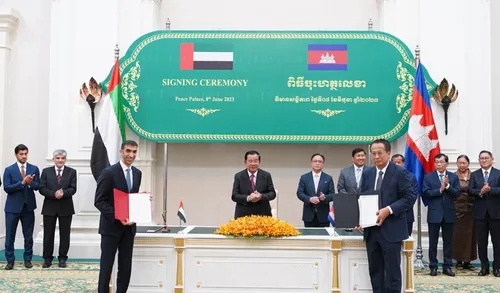
The United Arab Emirates launched the Comprehensive Economic Partnership Agreement (CEPA) programme in 2021, aiming to create its own trade network without relying on the multilateral trade system. By mid-2026, the UAE concluded 38 CEPA agreements, spanning across various regions, including India to Indonesia, Kenya to Chile, and Ukraine to Malaysia.
This aggressive trade diplomacy campaign has led to a significant increase in the UAE's non-oil foreign trade, reaching approximately US$527.4 billion in the first half of 2026, with non-oil exports climbing to around US$123.2 billion. The UAE's strategy involves using market access as a lever to boost domestic production and value chain growth.
Dubai and Abu Dhabi are positioning themselves as crucial nodes in global trade and supply chains, connecting Asian, African, and European markets. The India partnership, in particular, has shown promising results, with bilateral trade increasing from US$73 billion to US$84 billion year-on-year. Africa is where the UAE's CEPA model is expected to have the most significant impact, transforming economic relationships and deepening supply chains in sectors such as logistics, agriculture, aviation, clean energy, and services.
While the UAE has built a robust trade machine, the real question is whether these agreements will translate into genuine industrialization and productive capacity for Africa, Asia, and other smaller economies joining the network.
Written by urgent.news from IOL's reporting — not their text. Machine-written — may contain errors; check the original before relying on it.