Australia just figured out how to offer electricity cheaper. Why can’t the U.S.?
Electricity prices keep rising in the U.S . Last year, home electric bills surged at more than twice the rate of inflation. By 2030, by one estimate, residential electricity prices in some areas could be as much as 40% higher than they were in 2025. At least one in three American households struggle to pay energy bills . But the opposite is happening in Australia. Over the past 12 months,…
In the United States, electricity costs have been skyrocketing over the past year, soaring at more than twice the rate of inflation. By 2030, residential electricity prices in certain areas could be up to 40% higher than in 2025. A significant portion of American households are struggling to pay their energy bills, with one in three households facing this challenge.
Contrastingly, Australia has experienced a substantial decline in wholesale electricity prices over the past 12 months. Moreover, millions of consumers can now access three hours of free power during midday. This scenario illustrates how a more decentralized energy system—centered around rooftop solar and home batteries—can render electricity far more affordable when executed correctly.
Home batteries have played an instrumental role in driving down electricity prices in Australia. Following the government's introduction of a 30% discount on home batteries, the response was rapid. Within three weeks of the program's launch in July 2025, more than 1,000 home batteries were installed daily. To date, over 500,000 home batteries have been installed across the country.
Saul Griffith, co-founder of Rewiring Australia, an organization advocating for electrification, posits that batteries are instrumental in averting the 6 p.m. peak when numerous homes come home and turn on the TV, placing immense stress on the entire electricity network. Griffith, previously involved in creating parts of the Inflation Reduction Act in the U.S., returned to Australia and contributed to policy changes there.
He highlighted that batteries emerged as the most cost-effective solution compared to replacing aging coal power plants with gas-fired power plants or other alternatives.
The government's initial target was to support 1 million home battery installations by 2030; however, the program's popularity compelled lawmakers to double this goal to 2 million. Despite this progress, electricity prices continue to decline. Australia has facilitated the widespread adoption of rooftop solar—unlike the U.S., where such adoption remains less prevalent.
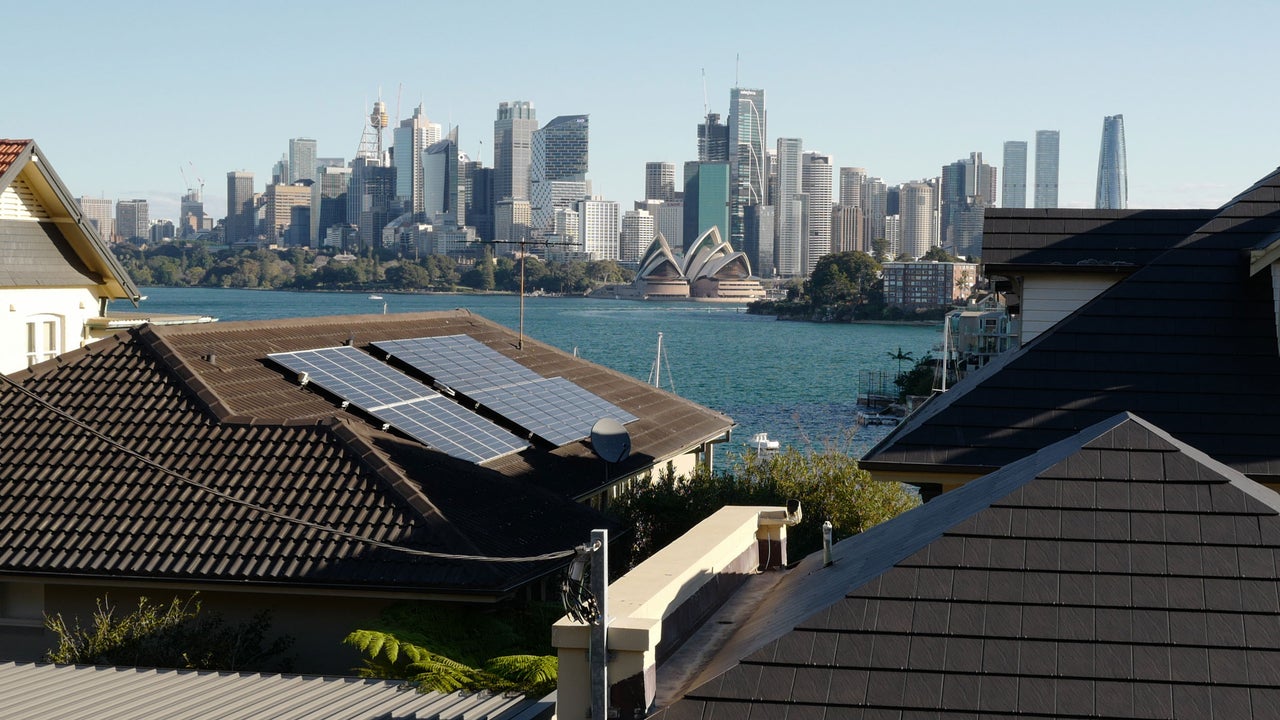
Even though Australia boasts more than one in three homes with solar panels, this is not solely due to its favorable weather conditions; the cost of installing solar panels is remarkably affordable in Australia.
Australians benefit from streamlined permitting processes, enabling homeowners to apply for permits via an app on their smartphones and receive approval within 24 hours. They can also have solar panels installed the following day, a stark contrast to the two to three months required for installations in the U.S. Furthermore, the Australian system entails fewer inspections and involves fewer middlemen, leading to reduced insurance costs and administrative complexity.
The resultant impact is that installing rooftop solar in Australia is significantly more affordable compared to the U.S., ranging from six to eight times cheaper. In Australia, rooftop solar is the most cost-effective form of electricity for consumers, leading to widespread adoption. Consequently, many local electricity substations "run negative" on certain days, indicating that they do not require additional electricity generation from grid sources due to substantial solar power production from residential homes.
However, there is an opportunity to alleviate potential wastage of solar power. In three Australian states, a "Solar Sharer" plan has been introduced, requiring utilities to provide customers with the option to receive three hours of free electricity during midday, regardless of whether they have rooftop solar panels. Griffith emphasizes that this initiative aims to instill a behavioral change in Australians—using abundant solar power during peak production hours by charging their cars, charging their batteries, or otherwise capitalizing on the excess energy.
This temporary measure seeks to encourage Australians to adapt their consumption patterns accordingly.
The comparatively low cost of solar power in Australia makes it more feasible for households to decarbonize their homes entirely. Griffith estimates that households can save between $5,000 and $6,000 annually if they electrify all their appliances and vehicles. If they also incorporate a battery to store surplus solar power, these savings can be further enhanced.
In the future, large-scale grid batteries are increasing rapidly in Australia; however, home batteries combined with rooftop solar systems offer distinct advantages, as the majority of the electricity cost is associated with transmission and distribution. Thus, maximizing rooftop solar installations and incorporating an extensive array of batteries remains the optimal strategy for achieving the most cost-effective electricity system.
Written by urgent.news from Fast Company's reporting — not their text. Machine-written — may contain errors; check the original before relying on it.