Art as Infrastructure at the Medina Triennial
The inaugural edition of the sprawling yet rigorous exhibition examines the labor, regulation, extraction, and repair of our shared systems.
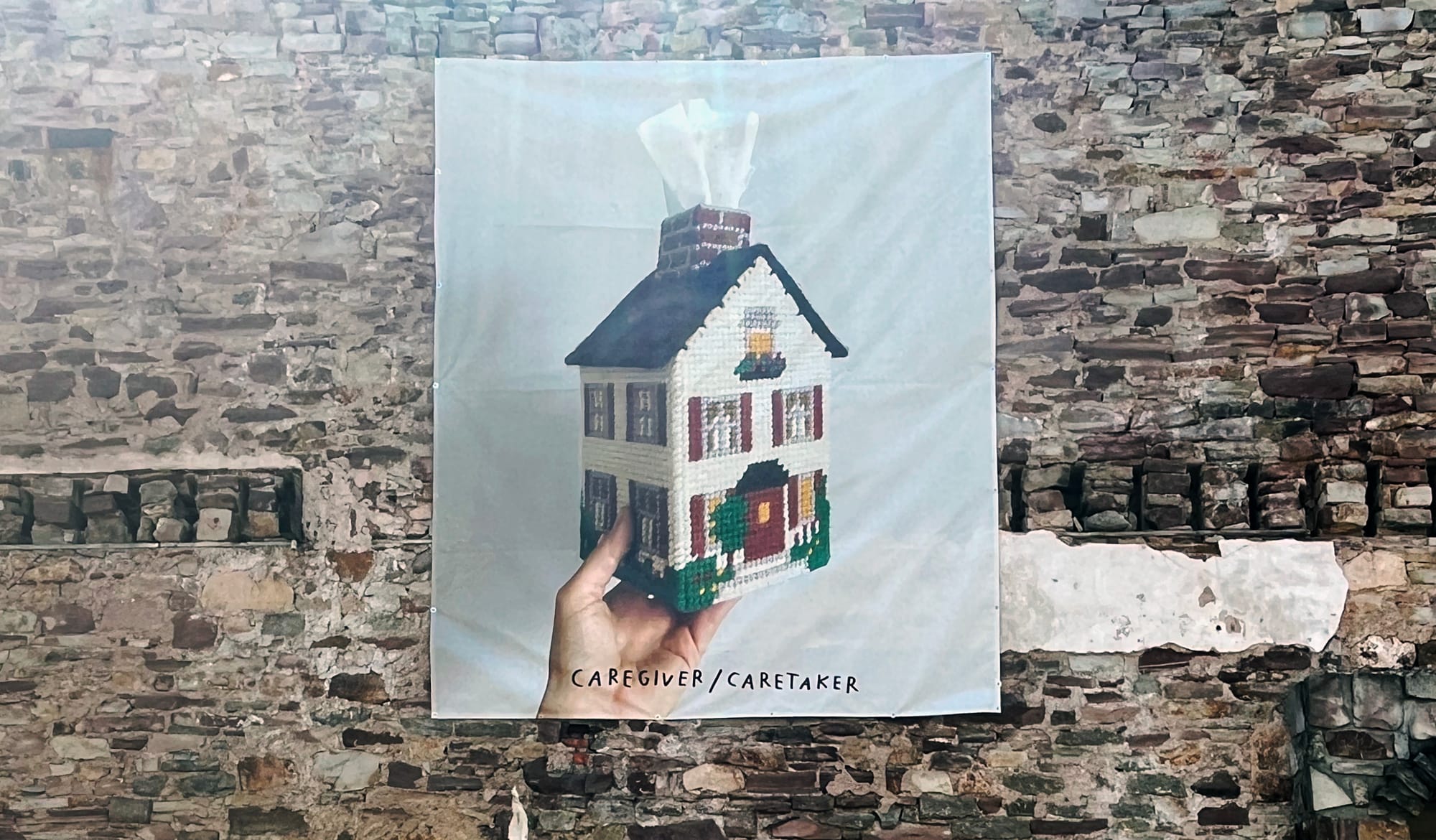
Medina Triennial, a community-wide exhibition in a rural Western New York community bisected by the Erie Canal, opened last weekend. Organized by Co-Artistic Directors Kari Conte and Karin Laansoo, the event brings together over 100 artworks by 39 artists across 10 locations. The curators' goal is to explore maintenance as a vital social, political, and environmental act, synthesizing art, ecology, architecture, and rural culture.
Unlike the overly dense installations at the Venice Biennale, Medina's works are sparsely placed, providing ample space for unhurried and uncrowded viewing. The river walk along the Erie Canal serves as a boundary path for performances and the site for Mary Mattingly's "Floating Garden" (2026) work.
Taysir Batniji's "Just in Case #2" (2024), a photographic archive of keys to Palestinian homes displaced since Israel's offensive post-October 7, 2023, evokes a sense of mourning for the devastating effects of ongoing war. The title of the Medina Triennial, "All That Sustains Us," captures the exhibition's curatorial premise, bringing together agricultural, industrial, ecological, civic, artistic, and historical forms of knowledge.
Visiting Medina meant navigating the town's historical Main Street, from storefronts and municipal buildings to the Erie Canal waterfront. The Historic Medina High School served as the main exhibition venue, with works displayed in its classrooms and common spaces. Notable pieces include the newly commissioned video work by Tania Candiani, "Two Waters" (2026), and Gamaliel Rodriguez's installation in the high school's classrooms and common spaces.
Written by urgent.news from Hyperallergic's reporting — not their text. Machine-written — may contain errors; check the original before relying on it.