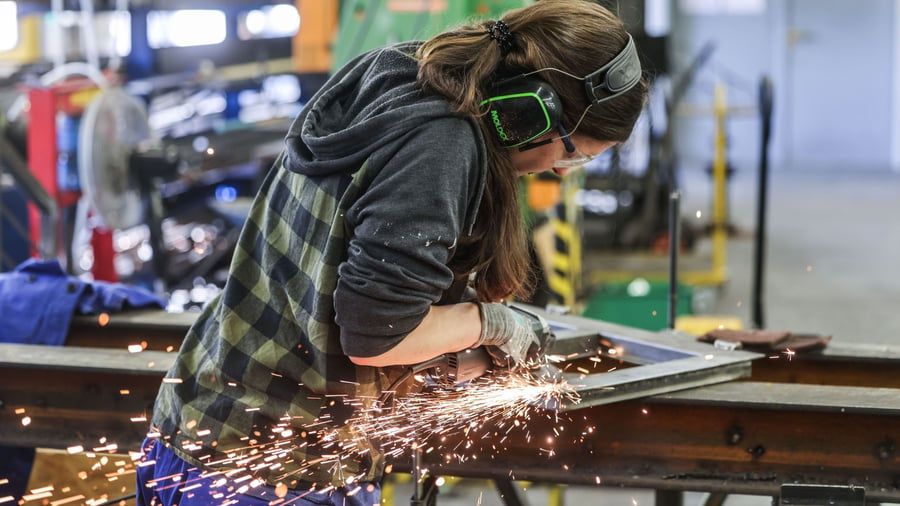
Arbeitsmarkt: Von wegen faul: Generation Z arbeitet häufiger als alle Vorgänger
Seit jeher gilt die Jugend als faul, der Gen Z wird das besonders nachgesagt. Daten der Bundesagentur widerlegen jetzt das gängige Klischee von der mangelnden Arbeitsbereitschaft der Jungen.
Germany's youngest generation, Generation Z, is working more frequently than any previous generation, according to a study by the Institute for Employment and Labor Research (IAB). The research, based on the Mikrozensus, reveals that the employment rate of 20- to 24-year-olds has increased by 7.1 percentage points from 2015 to 2025, reaching 76.8 percent.
This trend continued during the recent economic crisis, with the employment rate among younger individuals growing by an additional 0.9 percentage points from 2023 to 2025.
Despite the overall increase in labor market participation, young adults from 25 to 64 years old have continued their decade-long upward trend, with a 3.1 percentage point increase from 2015 to 2025. The researchers attribute this long-term trend to the growing labor participation of women and the elderly. Generation Z, defined as the birth years 1995 to 2010, is entering the 20- to 24-year-old age group, making them a focal point of public discussions in the economy, politics, and social media.
They are often described as the "Yes-but-generation," valuing work-life balance and carefully considering the worth of working extra hours. Professor Klaus Hurrelmann, a generation researcher, refers to them as such, emphasizing their desire for non-hierarchical structures and non-dictated conditions at work. The majority of jobs held by Gen Z are evenly distributed across various professions, with significant representation in the hospitality and food service industries, as well as retail.
A large proportion of the historically high labor engagement among Gen Z is attributed to students with side jobs. However, younger individuals are not underrepresented in leadership and organizational roles, as well as in service-oriented business sectors, which can be explained by the requirement for relevant work experience in these positions.
Other studies suggest that Gen Z does not view themselves as lazy and, in fact, works more in full-time positions than previous generations did at this stage in their lives.
Written by urgent.news from Handelsblatt's reporting — not their text. Machine-written — may contain errors; check the original before relying on it.