‘A new normal’: Miami faces worsening seaweed problem as piles of algae wash up on beaches
Officials have had to remove thousands of tons of sargassum from Florida’s beaches amid the climate crisis Dealing with seaweed is the bulk of Chris Bumpus’s job during the summer. As chief of conservation for Miami-Dade county’s parks, recreation and open spaces department, Bumpus is in charge of cleaning sargassum off 17 miles (27km) of county beaches. But some days, the odds are stacked…
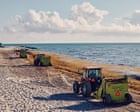
Miami grapples with an escalating seaweed problem as piles of algae accumulate on its beaches, exacerbating the impacts of the climate crisis. Chris Bumpus, chief of conservation for Miami-Dade county's parks, recreation, and open spaces department, leads the cleanup efforts on 17 miles of county beaches. The quantity of sargassum, a type of floating brown algae, has surged in recent years, washing up on the coasts of south Florida, West Africa, the Gulf of Mexico, and the Caribbean. In July alone, the county removed 9,000 tons of seaweed, surpassing all previous monthly records.
Before cleanup begins, crews mark sea turtle nests to protect them from the removal process. Miami-Dade county spends $3 million annually on sargassum removal, a figure that far exceeds any other county in Florida. The Florida Keys face heavier accumulations due to their inlet-like beach shape.
Sargassum originates from the Sargasso Sea, a region in the north Atlantic surrounded by currents that keep the seaweed concentrated there. However, since 2011, scientists have observed the formation of the Great Atlantic Sargassum Belt, stretching from West Africa to the Gulf of Mexico. Several factors contribute to the blooms, including nitrogen and phosphorus from rivers, warmer water temperatures, and ocean circulation.
Since 2011, the amount of sargassum has doubled every five years, leading to larger and denser mats washing up in Mexico, Florida, and the Caribbean.
Satellite imagery revealed that in 2025, the Great Atlantic Sargassum Belt reached its highest seaweed biomass ever, with 38 million tons, only slightly behind the 33.5 million tons observed in 2025. The climate crisis has also played a role, according to Brian LaPointe, a research professor at Florida Atlantic University Harbor Branch. Ocean warming, evaporation, and extreme rain events flush more nutrients from land into the ocean, indirectly increasing the nutrient supply to sargassum.
The county first began addressing its seaweed problem in 2019, with funds for annual removal coming from tourist development taxes. In July, Miami-Dade county commissioners voted to petition the state to allow more flexible use of beach raking equipment. LaPointe predicts that more aggressive removal efforts might be necessary, but they won't address the root causes of the massive blooms in the ocean. Instead, the focus should be on researching land-based nutrient sources to mitigate the problem.
Written by urgent.news from The Guardian US's reporting — not their text. Machine-written — may contain errors; check the original before relying on it.