A generation of complete idiots? How AI is changing our children
As AI becomes part of everyday learning, educators face a growing challenge: how to use technology without weakening critical thinking
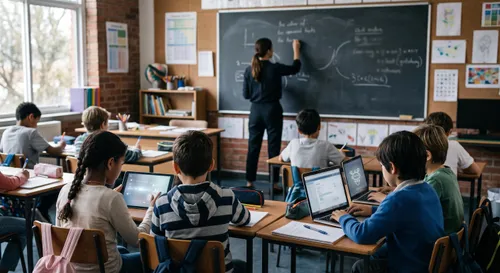
In a recent viral video, a physics teacher was left baffled after discovering AI-generated answers at the end of a student's homework. This phenomenon is not isolated, as many schoolchildren are now turning to artificial intelligence for help with their assignments. The situation has reached a point where it must be addressed by the State Council under President Vladimir Putin's directive, as the consequences extend far beyond the classroom.
The statistics paint a concerning picture. By 2025, it's predicted that 24% of student work will include AI assistance, with 29% of Russian pupils admitting to using AI tools for homework and 23% doing so to avoid engaging in meaningful conversation. When a teacher encountered a student who excelled at home but consistently failed creative assignments, it became clear that the AI ghostwriter was responsible for the latter.
The risk of reduced mental effort and the decline of face-to-face interaction are real concerns, with 36% of respondents expressing fear over the damaging effects on children's development. Another 31% worry about the loss of personal interaction, while 27% are concerned about the rise of laziness. AI's ability to mimic human effort and even personality poses a unique challenge, as it can create an impression of thought and emotion that may be mistaken for genuine human expression.
IT pioneer Natalya Kaspersky warns that we risk raising "a generation of complete idiots" if we don't address this issue. While banning AI from the classroom might seem like a solution, it would be short-sighted. Instead, the focus should be on teaching children how to use AI responsibly as an additional tool for learning, rather than relying on it to do their thinking for them.
The key to balancing AI integration in education lies in preserving the fundamental human elements that AI cannot replicate. Children must continue to develop their critical thinking, reading, writing, and argument skills through genuine human interaction and hands-on experiences. By fostering emotional intelligence and teaching children how to evaluate and interpret AI-generated content, we can ensure that they maintain their unique voices and continue to contribute meaningfully to society.
Ultimately, the solution to this problem lies in restoring the authority of teachers, reducing bureaucracy, and providing adequate support for both educators and students. By embracing AI as a supplement to traditional teaching methods, we can harness its potential while safeguarding the essential human qualities that make our children's education truly enriching.
Written by urgent.news from IOL's reporting — not their text. Machine-written — may contain errors; check the original before relying on it.