Why the Philippines’ Maharlika Fund should look at Heart Aerospace
The Philippines’ Maharlika Investment Corporation (MIC) is positioning electric aviation as a potential strategic investment area as it seeks projects that strengthen national resilience and generate at least a 10% economic internal rate of return (EIRR) . MIC is mandated to deploy "counter-cyclical capital" into sectors considered critical to the economy, including energy, logistics, agriculture…
The Philippines' Maharlika Investment Corporation (MIC) is exploring electric aviation as a strategic investment opportunity aimed at bolstering national resilience and achieving a minimum 10% economic internal rate of return (EIRR). This focus aligns with MIC's mandate to invest in sectors crucial to the economy, such as energy, logistics, agriculture, and mining.
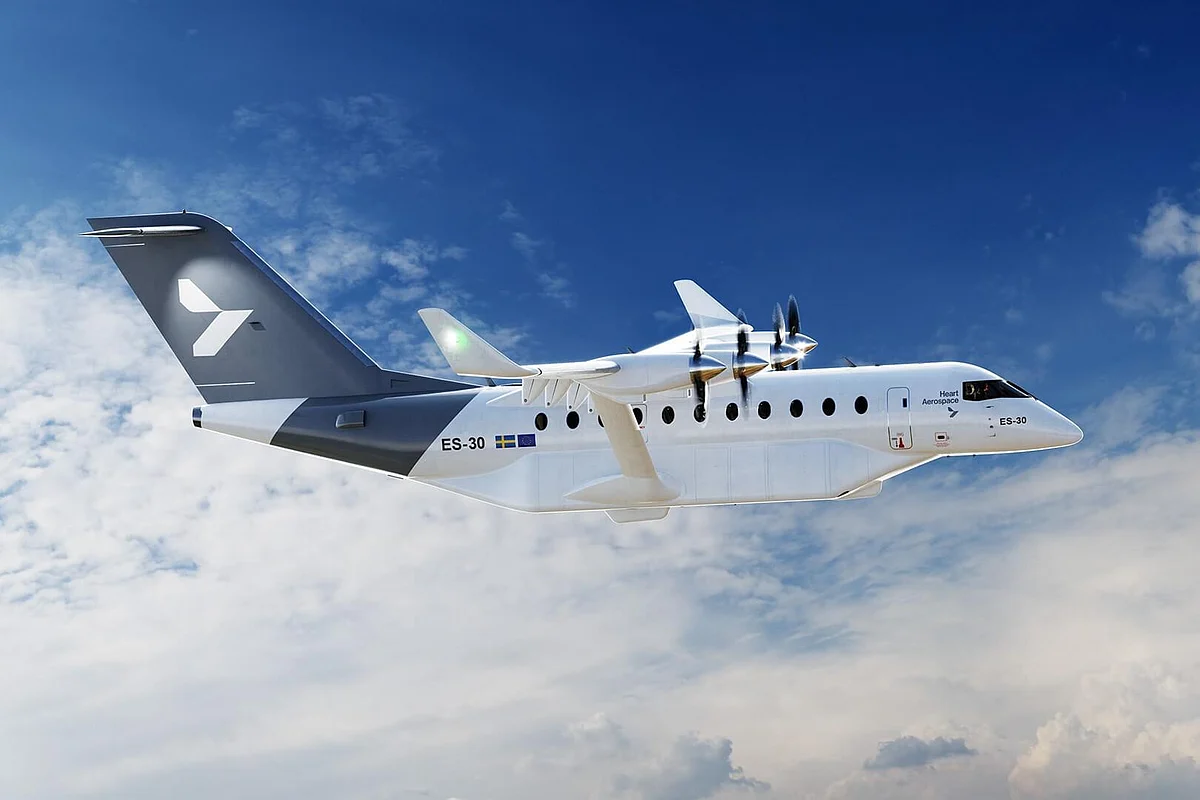
Heart Aerospace's ES-30 hybrid and all-electric regional aircraft program complements these priorities by addressing transport connectivity, electrification, and industrial development. The ES-30 is engineered to cater to regional routes, providing electric propulsion for shorter flights and hybrid-electric capability for longer sectors, which could lead to reduced fuel consumption and emissions while enhancing connectivity between smaller airports.
This investment opportunity is grounded in the physics and economics of electric flight, considering the Philippines' archipelagic nature. MIC's funds, the Maharlika Investment Fund, manage a sovereign wealth fund with a capital of ₱500 billion, backed by a total of approximately ₱129.48 billion. The fund aims to deploy ₱25 billion by the end of 2025 and intends to execute 3–4 deals in the US$150 million range in energy, agriculture, and mining sectors.
MIC's investments must achieve at least a 10% EIRR and consider socioeconomic impacts, including job creation, infrastructure development, and sustainability. Heart Aerospace, a Sweden-founded, U.S.-based developer, is targeting certification for its ES-30, a 30-seat hybrid-electric regional airliner designed for short-haul routes.
The aircraft, with a 200-km all-electric range and 800-km range in hybrid mode, achieved a significant milestone on August 12, 2026, with its full-scale demonstrator, the world's largest battery-electric aircraft to date. Heart Aerospace has secured significant funding, totaling around US$184 million, from prominent investors such as Breakthrough Energy Ventures, United Airlines Ventures, Air Canada, Mesa Air Group, and EQT Ventures.
Despite commitments from major carriers like United Airlines, Air Canada, and JSX, the orders are primarily letters of intent rather than confirmed revenue. The economic benefits of the ES-30 include a projected 40% reduction in operating costs compared to traditional regional aircraft, attributed to lower energy expenses, simpler maintenance, and higher uptime.
The shift toward electric aviation is driven by three key factors: physics favors electrons for short sectors, the energy density gap, while real, can be managed regionally, and electric motors and powertrains are inherently more efficient than traditional turboprops or jets. For inter-island travel in the Philippines, where routes are predominantly short, electric propulsion is well-suited, and hybrid technology can extend range for longer journeys.
Additionally, electric/hybrid-electric aircraft offer advantages such as reduced emissions, noise pollution, and potential cost savings due to lower variable costs and higher efficiency. Given these factors, MIC should seriously consider investing in Heart Aerospace to capitalize on the rapidly developing electric regional aviation market and contribute to the Philippines' national resilience and economic growth.
Written by urgent.news from Gulf News's reporting — not their text. Machine-written — may contain errors; check the original before relying on it.