Why is Kaziranga’s Eco-Sensitive Zone in focus? | Explained
Assam Chief Minister Himanta Biswa Sarma’s indication that the width of the buffer zone around the Kaziranga National Park and Tiger Reserve may be fixed at a minimum of 1 km instead of the default 10 km has stoked controversy
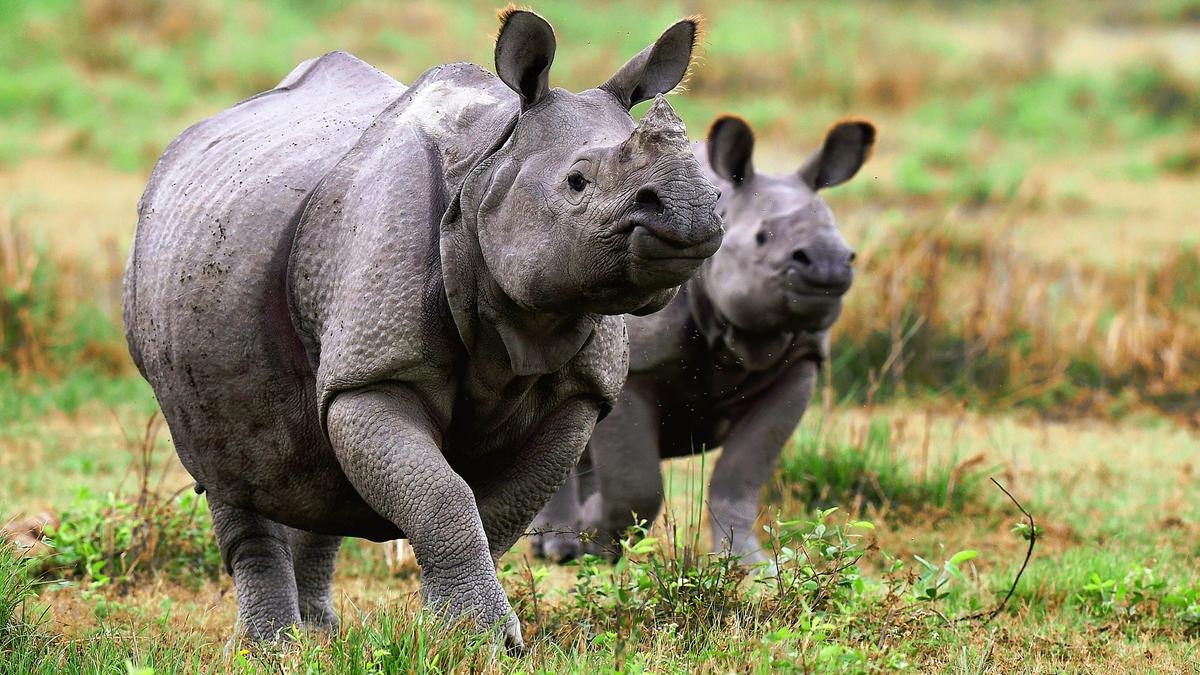
The Assam government has proposed reducing the Eco-Sensitive Zone (ESZ) around Kaziranga National Park and Tiger Reserve from the standard 10 km to a minimum of 1 km. This has sparked debate, with critics arguing the move will hinder urban growth and lead to increased human-animal conflicts. The ESZ, also known as an Ecologically Fragile Area, is a buffer zone around protected areas to prevent heavy human damage, reduce human-animal conflicts, and enhance conservation of natural assets.
The National Board for Wildlife (NBWL) adopted a resolution in 2002 to declare such buffer zones under the Environment (Protection) Act of 1986. An ESZ is viewed as a transition zone between high-protection areas and low-protection areas, not affecting the daily activities of people living nearby. Activities within an ESZ are categorized as prohibited, regulated and permitted.
Prohibited activities include commercial mining, sawmills, industries causing pollution, hydroelectric projects, among others. Assam has numerous protected areas with ESZs varying by site. The Chief Minister cited Deepor Beel, a Ramsar Site near Guwahati, to argue for a smaller 1-km ESZ for Kaziranga, citing the extensive human settlement and industrial activities around it.
The proposal has drawn criticism from environmental activists and politicians, who argue it could harm wildlife conservation and migration routes.
Written by urgent.news from The Hindu - Sci-Tech's reporting — not their text. Machine-written — may contain errors; check the original before relying on it.