Why don’t we ask why?
THERE is something peculiar about the way we talk about voters. When Americans vote for Donald Trump, commentators often conclude that they must be stupid. When South Africans support Jacob Zuma and MK, the response is similar: How could anyone possibly vote for these people?
There's an oddity in how we discuss voters, especially in the context of choosing leaders like Donald Trump or Jacob Zuma. Commentators often assume these people must be foolish. Similarly, when South Africans support Jacob Zuma and MK, the question tends to be: "How could anyone vote for these individuals?" However, perhaps we're asking the wrong question.
Instead of focusing on the voters' intelligence, we should ask "Why?" Maybe they aren't voting for Trump or Zuma out of sheer stupidity. Consider football: I'm not a fan of Manchester United. My reasons for disliking the club have little to do with the sport itself. I associate the team with arrogance and superiority. Consequently, I don't evaluate all other clubs before deciding to support one.
For many Trump supporters, the decision to vote for him might not stem from admiration for Trump himself. It could be more about rejecting the Democrats, Washington, the establishment, or a system they perceive as having failed them. Likewise, certain Zuma and MK supporters might not necessarily believe Zuma is an exceptional leader.
Instead, they may be rejecting the ANC establishment and a political system they feel has let them down. The politician becomes a symbol for their protest vote. They ask: "How could anyone possibly vote for this person?" Perhaps a better question would be: "What circumstances have driven people to vote against the system to the extent of overlooking the leader's shortcomings?"
This brings us to South Africa's most uncomfortable reality: inequality. For millions of South Africans, the vast disparity between rich and poor isn't just a statistic; they experience it daily. Yet, there's often an astonishing tendency among some sections of the privileged establishment to act as if this gap has vanished. As if the mere presence of more black faces in positions of visibility indicates that the underlying problem has been resolved.
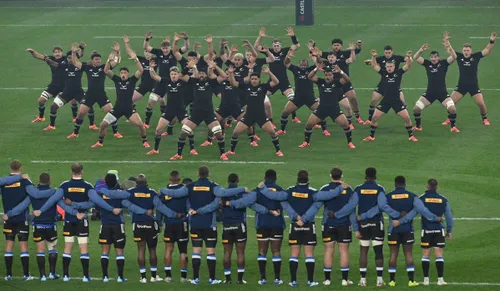
For instance, the Springboks have changed, with black players now central to the team, and Siya Kolisi's captaincy has become a powerful symbol of transformation. Yet, rugby remains deeply entwined with white, particularly Afrikaans, South African history, and racism still permeates the sport's culture. So, when some South Africans of color support the All Blacks, perhaps we should ask "Why" instead of simply disapproving of their choice.
Maybe they see something that others are unwilling to acknowledge. Representation on the field doesn't automatically translate to transformation of the system. A black or colored child can watch a Springbok team that appears increasingly representative of South Africa, yet still walk outside into a society where the economic divide remains immense.
This mirrors the same error commentators make when discussing Trump and Zuma. They look at the politician and ask "How could anyone support him?" They look at the Springbok team and ask "How could anyone support the All Blacks?" But in both scenarios, they're focusing on the symbol rather than the underlying grievance. Perhaps the voter isn't stupid.
Maybe they're saying "You're not listening to us." And perhaps the real question we should be asking isn't "What have we done to make them want to vote against us?" The true story may not lie in the voters' supposed foolishness. It might be the establishment's failure to comprehend why voters have stopped listening. Naidoo is an author and a sportswriter who has been writing for 30 years. He has played representative tennis, squash, and cricket, and has covered four Olympic Games.
Written by urgent.news from IOL's reporting — not their text. Machine-written — may contain errors; check the original before relying on it.