When the sirens become a national anthem: confronting Ghana’s road accident crisis
There is a growing crisis unfolding on our roads, and we must confront it with honesty, urgency, and a collective determination to act.
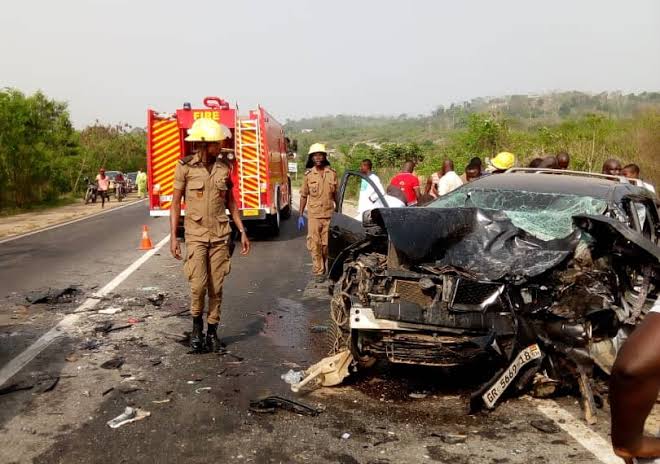
A growing crisis has emerged on Ghana's roads, necessitating honest, urgent, and collective action. In 2025, the country recorded 14,743 road traffic accidents, resulting in 2,949 deaths and 16,714 injuries. This grim trend persisted into 2026, with 4,899 crashes alone claiming 1,009 lives and injuring 5,982 individuals. These statistics are not mere numbers; they represent families grieving, children losing parents, and communities mourning the loss of valued citizens.
As Chairman of the Governing Board of the Driver and Vehicle Licensing Authority (DVLA), I find these statistics deeply troubling. Yet, I see this as an opportunity to engage in an open national dialogue about road safety. We must recognize that no single factor causes road accidents in Ghana. Poorly maintained roads, inadequate lighting, and the absence of essential safety features all play a role.
Additionally, corruption within certain segments of our enforcement institutions weakens road safety efforts. When traffic regulations can be easily violated, their effectiveness is compromised.
While infrastructure improvements and enhanced enforcement are necessary, we must also address the most crucial factor: human behavior. The typical Ghanaian driver tends to speed through amber traffic lights, accelerates at junctions, disregards lane discipline, ignores right-of-way rules, and neglects the simple principle of first in, first out. This indiscipline is a significant contributor to the high number of fatalities.
The DVLA, alongside the National Road Safety Authority, the Motor Traffic and Transport Department of the Ghana Police Service, and the National Insurance Commission, is working together to develop a coordinated, data-driven approach to road safety. Key initiatives include the rollout of RFID-enabled vehicle number plates, a driver demerit point system, and enhanced roadworthiness certification. These measures aim to improve vehicle identification, accountability, and the overall quality of drivers on Ghana's roads.
Moreover, I propose a new driver's license acquisition regime that combats fraud, eliminates fake licenses, strengthens driver testing, and ensures only qualified individuals receive licenses. The National Insurance Commission should also consider a risk-based insurance model that ties insurance premiums to driver behavior. High-risk drivers would face higher premiums, while safe drivers would be rewarded.
While technology and legislation are crucial, they are not sufficient on their own. True change requires a shift in attitudes. Indiscipline is a cost that we cannot continue to bear. The DVLA's success will not be measured solely by technological advancements or increased revenue. It will be judged by our ability to reduce these distressing statistics, ensure that only responsible drivers operate vehicles, and, most importantly, save lives.
Road safety is a shared national responsibility, and the most effective safety device is the human attitude. The time for change is now, and this transformation must start with every one of us the moment we step behind the wheel.
Written by urgent.news from MyJoyOnline Ghana's reporting — not their text. Machine-written — may contain errors; check the original before relying on it.