VCU Arts Qatar stages collateral exhibition during the Venice Biennale exploring the thresholds of perception
The institution’s debut Venice Biennale collateral exhibition seeks to redefine the boundaries between art, technology and human cognition While the curation of the 61st Venice Biennale by the late Koyo Kouoh sought to shift away from high-tech spectacle and internet-optimized art to focus on art that reflected a slower, more contemplative pace, several collateral exhibitions seek to similarly…
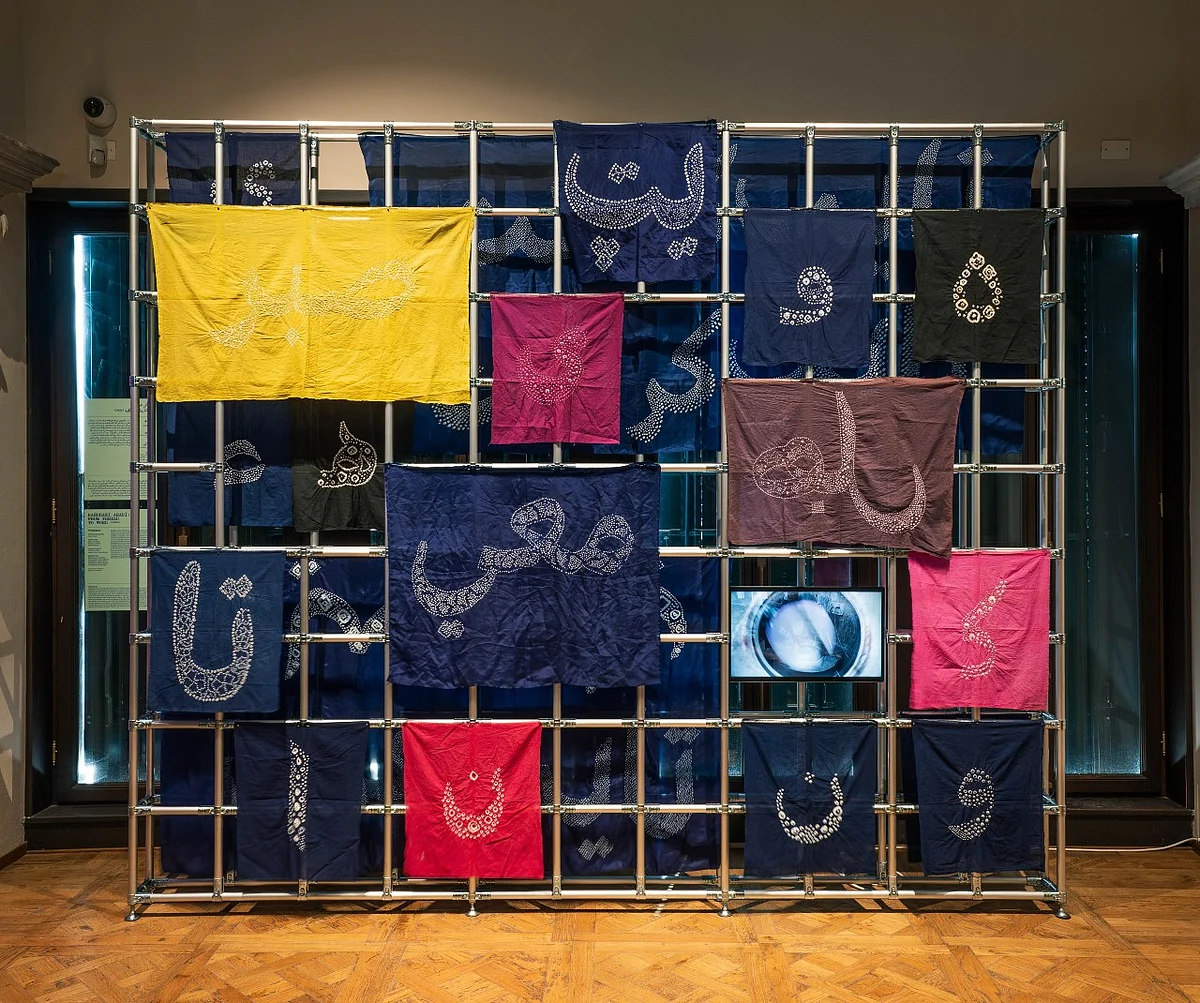
VCU Arts Qatar presented a thought-provoking collateral exhibition during the 61st Venice Biennale, titled "Aghrab Idrāk," which seeks to redefine the boundaries between art, technology, and human cognition. The exhibition aimed to challenge the audience's understanding of perception by presenting a diverse array of digital and kinetic artworks created by faculty and researchers from VCUarts Qatar.
The exhibition opened on June 1st at Palazzo Cavanis in Venice and ran until November 22, offering visitors an immersive experience through the exploration of various sensory elements such as light, sound, movement, shadow, and physical materials.
The artworks presented in "Aghrab Idrāk" were structured as a series of spatial thresholds, inviting viewers to traverse environments that emphasized the nuanced aspects of experience, including proximity, sustained sensory attention, ambiguity, and repetitive light and sound. Key works included "A Monocular Monologue," a dystopian robotic figure by Mesh Lab that reflects on artificial existence and forces beyond human control, and "Preceding Emptiness," an LED light installation by xLab that transforms fluorescent bulb clicks into an intentional acoustic.
The title "Aghrab Idrāk," meaning "strange knowledge" or "unusual perception" in Arabic, draws from historical philosophical exchanges between ancient Greek and Arab works. The curation of the exhibition sought to explore how individuals perceive academic research and art creation today, emphasizing that creative research actively participates in shaping our understanding of culture.
The exhibition aimed to challenge traditional notions of perception, presenting artworks as fluid and shaped by context, movement, and memory.
VCUarts Qatar's participation in the Venice Biennale showcased the institution's commitment to merging traditional Arab and Khaleeji culture with cutting-edge technology, including AI, kinetic design, and electronic acoustics. The exhibition featured projects such as the "Bandhani Arabi" digital typeface and textile art, created by TypeAraby, an experimental platform and research lab dedicated to Arabic typography and type design.
Additionally, the "The Gulf Between Us" zine and sculptural installation by Water with Water offered a nuanced portrayal of daily life in the modern Arab Gulf, seeking to distance itself from orientalist tropes.
The exhibition's opening symposium, "Relational Ecologies: Perception, Mobility, and Collective Form," provided a platform for artists, designers, curators, and researchers to delve into creative practices across histories, infrastructures, and communities. Through "Aghrab Idrāk," VCU Arts Qatar successfully invited audiences to reconsider their perceptions of reality and embrace the fluidity of human perception.
Written by urgent.news from Gulf News's reporting — not their text. Machine-written — may contain errors; check the original before relying on it.