Technological convergence, disruptive innovation and the future of youth education in Ghana
Ghana marks National Youth Week against a demographic and labour-market reality that should concentrate the minds of policymakers, educators and anyone concerned about the country’s future.
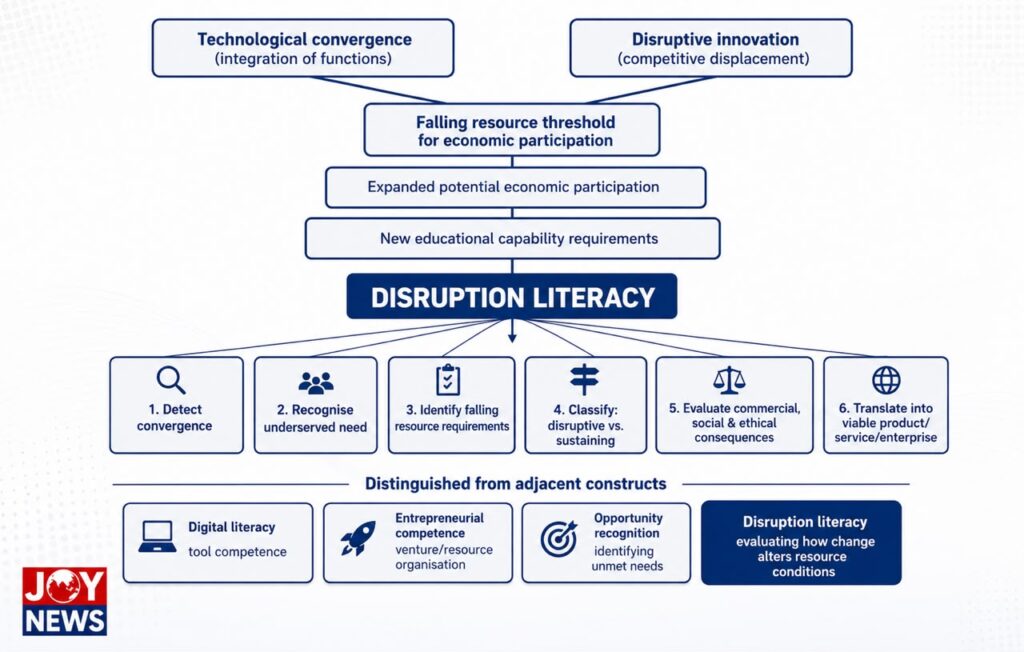
Ghana observes National Youth Week amid demographic and labor market realities that should alarm policymakers and educators. Young people aged 15-35 make up a significant portion of the population, yet youth unemployment remains high. Technological convergence and disruptive innovation could reshape the landscape for Ghana's youth.
Technological convergence refers to the blurring lines between previously distinct technologies. A smartphone, for instance, serves multiple functions, including communication, content creation, and payment processing. Conversely, disruptive innovation involves technologies that initially serve underserved markets and fundamentally alter established structures.
It's crucial to distinguish between the two, as not every new technology is disruptive. The economic landscape for young people in Ghana has evolved, with many industries requiring less capital to enter. For example, aspiring authors can now publish digitally, filmmakers can create using smartphones, and musicians can distribute music online.
However, success is not guaranteed, as platforms and algorithms often determine visibility and access. While technology may reduce the capital needed to start a business, it cannot replace the need for connectivity, skills, working capital, and a supportive environment. Despite these challenges, Africa, including Ghana, is already witnessing the potential of technological convergence, with mobile money being a prime example of how innovation can leapfrog traditional infrastructure.
Written by urgent.news from MyJoyOnline Ghana's reporting — not their text. Machine-written — may contain errors; check the original before relying on it.