Record-early champagne harvest highlights climate change impact on French vineyards
This year, the champagne industry's governing body has advanced the official harvest start date to Aug. 12 — more than a week earlier than last year's Aug. 20 start.
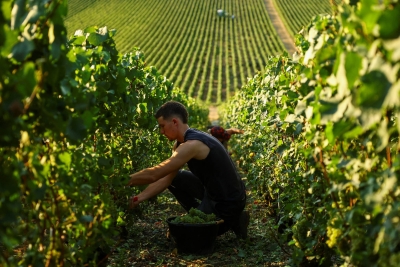
In the Champagne region of northeast France, grape harvesters began their work earlier than ever on August 14, marking the second earliest harvest since records started in the early 20th century. Unusually high temperatures and drought across Europe this summer have put France's champagne industry to the test. The Champagne Committee, which sets harvest dates based on grape maturity, moved the official start to August 12, nearly a week ahead of last year's August 20 start date.
Benoit Velut, a Champagne producer in Montgueux, noted that winemakers face a "no August vacation." His father, Denis, recalled that harvesting used to occur after school resumed in late September or October, when temperatures were still mild. In the 1990s, a winemaker would have found it hard to believe grapes were being harvested before mid-August.
Vincent Finot, another local winemaker, was granted permission to start harvesting on August 6, the earliest date ever recorded in the Champagne region, thanks to tests showing a sharp drop in grape acidity. Rising temperatures have steadily pushed French grape harvests earlier over the past half-century, experts say. On average, harvest dates have shifted forward by about 21 days.
The industry has already suffered losses due to spring frost, which wiped out around 30% of this year's crop. Heat and drought have further reduced yields, with some grapes weighing up to 30% less than usual. To cope with the anticipated lower harvest, Champagne producers have relied on reserve stocks and a system to reintroduce stored wines.
Despite the challenges, the evolving climate may prompt champagne producers to adapt. Some experts predict a shift towards warmer, higher-alcohol wines, though this could diminish the delicate, ethereal character that defines champagne. Producers are exploring traditional practices such as planting more resilient grape varieties and maintaining ground cover to conserve moisture.
Written by urgent.news from Japan Times's reporting — not their text. Machine-written — may contain errors; check the original before relying on it.