Rats, not power, could pose overlooked risk to AI data centers
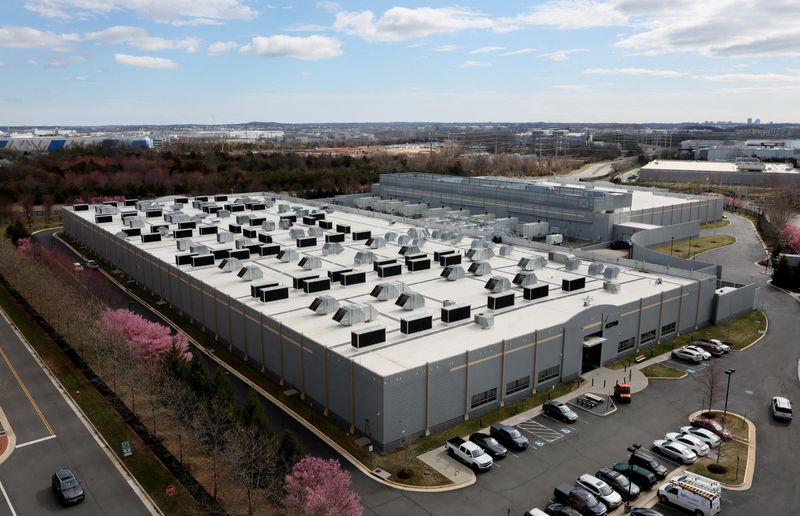
The artificial intelligence boom is prompting a construction race for data centers and a surge in electricity consumption, but an unforeseen threat to the industry's infrastructure might stem from something far less advanced: rats. Rodents, combined with maintenance malfunctions and other ordinary property risks, could disrupt highly automated facilities that rely on steady power and connectivity, stated Kade Thomas, founder and CEO of Cerv Property Solutions, in an interview with Investing.com.
Thomas, who has over two decades of experience in the property-services industry, emphasized that the most significant risk often lies in physical vulnerabilities that can surface around critical infrastructure. According to Thomas, rats can gnaw through wiring and cables, leading to power outages or equipment damage. Additionally, factors such as overgrown vegetation, dry leaf accumulation, and unmanaged trees can obstruct HVAC air intakes, raise ambient temperatures, and pose fire hazards.
In heat-prone regions like Texas, home to 335 active data centers and 248 more under construction, such seemingly minor issues can rapidly escalate into catastrophic damage. Thomas's warning arrives as AI companies and data-center operators invest billions in expanding computational capacity, with power availability, grid connections, and cooling systems emerging as constraints on growth.
However, Thomas argues that operators must also intensify their focus on basic property maintenance, which is frequently neglected amidst the emphasis on cutting-edge technology. He stressed that maintenance failures can have a disproportionate impact in data centers, where even a minor physical issue can disrupt operations or harm expensive equipment.
Therefore, pest control, inspections, and preventive maintenance should be considered integral to the reliability equation, rather than secondary property services, said Thomas. The property-services industry expert contends that the AI infrastructure expansion is generating a new class of physical assets whose reliability hinges not only on advanced chips and ample electricity but also on seemingly mundane systems that maintain building operations.
As data centers grow in value and become more densely populated with computing equipment, seemingly insignificant failures could become increasingly costly. A chewed cable, a neglected leak, or a missed maintenance problem may not appear as an AI risk, but in a facility where uninterrupted operation is crucial, the repercussions can be substantial.
For the rapidly expanding AI industry, ensuring the continuous functioning of these systems may ultimately necessitate equal attention to the fundamentals of property management as to the technology underpinning the next generation of computing.
Written by urgent.news from Investing.com's reporting — not their text. Machine-written — may contain errors; check the original before relying on it.