Pharma Races to Scale AI as Billions Flow into Drug Discovery
Investors unpack what it takes to succeed in an increasingly crowded AI biology ecosystem. The post Pharma Races to Scale AI as Billions Flow into Drug Discovery appeared first on GEN - Genetic Engineering and Biotechnology News .
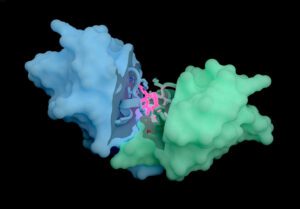
The AI drug discovery landscape is rapidly evolving, with massive investments pouring into end-to-end platforms driven by AI models and compute power. Isomorphic Labs, a Google DeepMind spinoff, is at the forefront of this revolution, building a general design engine that can be applied to any disease area. Their IsoDD platform (Isomorphic Labs Drug Design Engine) expands the druggable landscape by probing previously inaccessible biology, predicting cryptic protein binding sites and induced-fit interactions.
This platform is now partnered with pharma giants like Novartis, Eli Lilly, and Johnson & Johnson, as well as biotech companies like Incyte.
DeepMind's influence in life sciences extends beyond Isomorphic Labs. The AlphaFold developer is now constructing an AI scientist, Co-Scientist, a multi-agent system built with Google's Gemini. This system demonstrated potential applications in drug repurposing, novel target discovery, and explaining mechanisms of antimicrobial resistance.
Decoupled from clinical proof, the industry's investment in AI extends to major partnerships training biological foundation models with proprietary datasets from leading pharma companies. Notable examples include Genesis Molecular AI and Incyte's $1 billion-plus partnership, Chai Discovery's licensing agreement with Pfizer, and Eli Lilly's aggressive adoption of AI, securing its own AI-focused partnership with Chai and partnering with Tamarind Bio for Tamarind Bio's inference infrastructure.
Despite the massive investment, few AI-designed drugs have reached the clinic yet. Analysts argue that the AI drug discovery valuation cycle has decoupled from clinical proof, with capital chasing computational promise on its own terms. Some investors focus on pursuing problems others cannot tackle, such as Obvious Ventures' portfolio company Inceptive.
This company is developing foundation models for sequence-based medicines, like RNA interference therapies, and has partnered with Alnylam Pharmaceuticals to advance siRNA design with up to $2 billion in potential value.
Written by urgent.news from GEN Biotechnology's reporting — not their text. Machine-written — may contain errors; check the original before relying on it.