Over 4,200 undocumented migrants intercepted at South Africa's borders
Between April and July, South Africa intercepted over 4,200 undocumented foreign nationals at its borders, revealing ongoing challenges in border control.
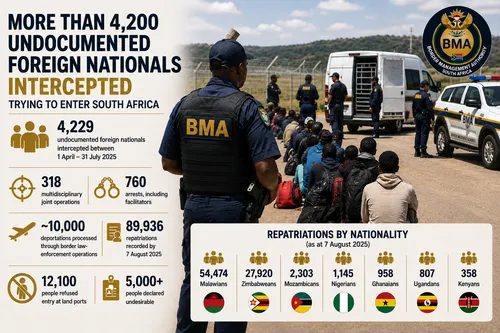
Between April and July, over 4,200 undocumented foreign nationals were intercepted attempting to enter South Africa through unofficial border points, according to the Border Management Authority (BMA). The majority of these individuals were apprehended along the northern border with Zimbabwe, followed by areas near the borders of Lesotho and Mozambique.
The BMA conducted 318 multidisciplinary joint operations during this period, leading to approximately 760 arrests, including of facilitators accused of aiding illegal crossings. In the same timeframe, the authority processed about 9,950 deportations through border law enforcement operations. By August 7, the BMA had recorded a total of 89,936 repatriations.
Malawians comprised the largest group, accounting for 54,474 repatriations, followed by Zimbabweans (27,920) and Mozambicans (2,303). Other nationalities included Nigerians (1,145), Ghanaians (958), Ugandans (807), and Kenyans (358). Most repatriations were handled through the Beitbridge corridor, while the remaining were processed at OR Tambo International Airport.
Home Affairs reported that 82,875 people were processed through its repatriation and deportation program by August 6. The high number of interceptions has prompted authorities to bolster border control measures and return policies. The BMA has implemented a counter-return plan involving increased border patrols, vehicle checkpoints, roadblocks, and enhanced immigration enforcement at ports of entry.
Deported or repatriated individuals are being added to the Entry and Visa Stop-list (V-list), which imposes immigration restrictions on them. At land ports, officials are tightening screening procedures, refusing entry to 12,100 individuals during the three-month period. Those not able to provide a clear address, demonstrate sufficient funds, or explain their purpose of visit are subject to stricter scrutiny.
Additionally, over 5,000 people were declared undesirable, including repeat offenders and visa overstayers. To address these issues, Home Affairs is rolling out electronic and biometric immigration systems, such as an integrated entry-exit system, to identify visa overstays and track travelers' immigration histories. The government is also working to relocate refugee reception centers to border points like Beit Bridge and Lebombo, allowing asylum applications to be processed closer to the point of entry.
The BMA is establishing border security forums around the country's ports and utilizing technology and surveillance to identify individuals attempting to cross outside formal ports. A technical team is evaluating vulnerable border sections and determining the necessary infrastructure to strengthen them. Home Affairs has advertised 301 inspectorate positions, and a business case for additional enforcement capacity has been submitted to the National Treasury.
The government's actions have received calls for stronger enforcement from Build One South Africa (BOSA), which cites poor enforcement of existing laws and inadequate control by the BMA as the root causes of illegal entry and border breaches. BOSA argues that preventing deported or undesirable foreign nationals from returning necessitates robust, integrated biometric systems and improved data-sharing among government agencies.
While acknowledging the need for investment in border infrastructure and technology, BOSA warns that these measures alone will not resolve the problem; they emphasize the importance of strengthening existing tracking systems to identify previously deported or undesirable individuals. BOSA also highlights factors such as corruption, inadequate staffing, poor infrastructure, and weaknesses at ports of entry as contributing to illegal entry and stay.
The party calls for stronger enforcement, improved systems, and enhanced capacity at borders and ports of entry, including the strict enforcement of existing immigration laws and comprehensive policies for legal entry. Home Affairs revealed that over 17,000 foreign nationals are seeking to have their overstay appeals lifted, with each case evaluated individually.
The extensive repatriation program has placed significant financial pressure on Home Affairs, with the department spending R292 million on the operation, described as an "unfunded mandate." Director-General Livhuwani Makhode disclosed that the government had initially received R60 million from the contingency reserve but underestimated the scale of the operation, stating, "We did not anticipate the huge volumes."
The department has sought additional funding and approached the governments of Malawi, Nigeria, and Ethiopia for reimbursement of costs through the Department of International Relations and Cooperation.
Written by urgent.news from IOL's reporting — not their text. Machine-written — may contain errors; check the original before relying on it.