On this day in space! Aug. 17, 1877: Asaph Hall Discovers the Martian moon Phobos
On this day in space, Aug. 17, 1877: American astronomer Asaph Hall discovered Mars's moon Phobos.
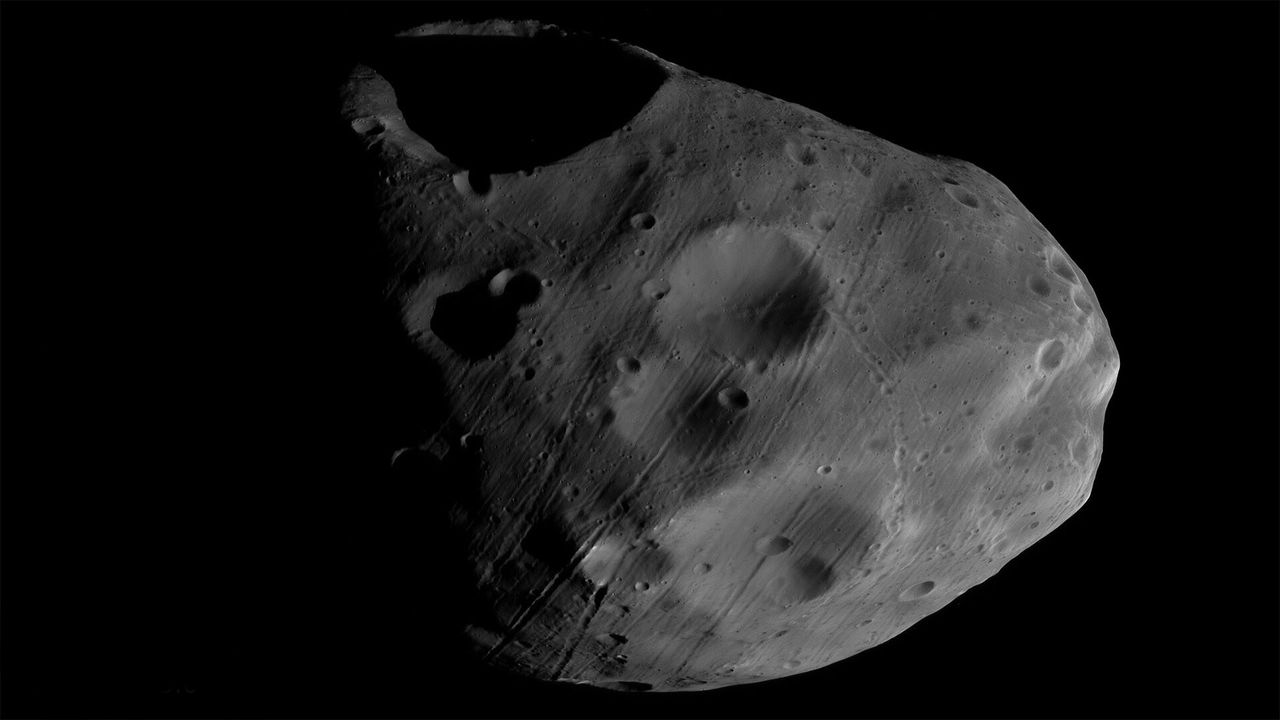
On August 17, 1877, American astronomer Asaph Hall discovered the first known moon of Mars. The larger of Mars' two moons, Phobos, has a mean diameter of about 14 miles (22.5 km). However, despite its size, Phobos has very weak gravity, which prevents it from assuming a spherical shape like Earth's moon. Phobos' oblong surface is marked by many small craters and a large one, named Stickney after Asaph Hall's wife, Angeline Stickney.
Stickney resembles a giant hole on one end of Phobos, potentially indicating that the moon narrowly escaped destruction when it was formed.
Written by urgent.news from EarthSky's reporting — not their text. Machine-written — may contain errors; check the original before relying on it.
This story
This is one outlet's version. Read the fullest account.