NASA Challenge Tests Wheel Designs for Moon Base Mobility
As NASA prepares to establish the Moon Base, advancing surface mobility will be key to helping crews and robotic systems travel farther across the lunar surface. To help advance that capability, the Rock and Roll with NASA Challenge invited public innovators to design and build next-generation lunar rover wheels. Five teams from 128 submissions and 49 countries advanced to the final phase of the…
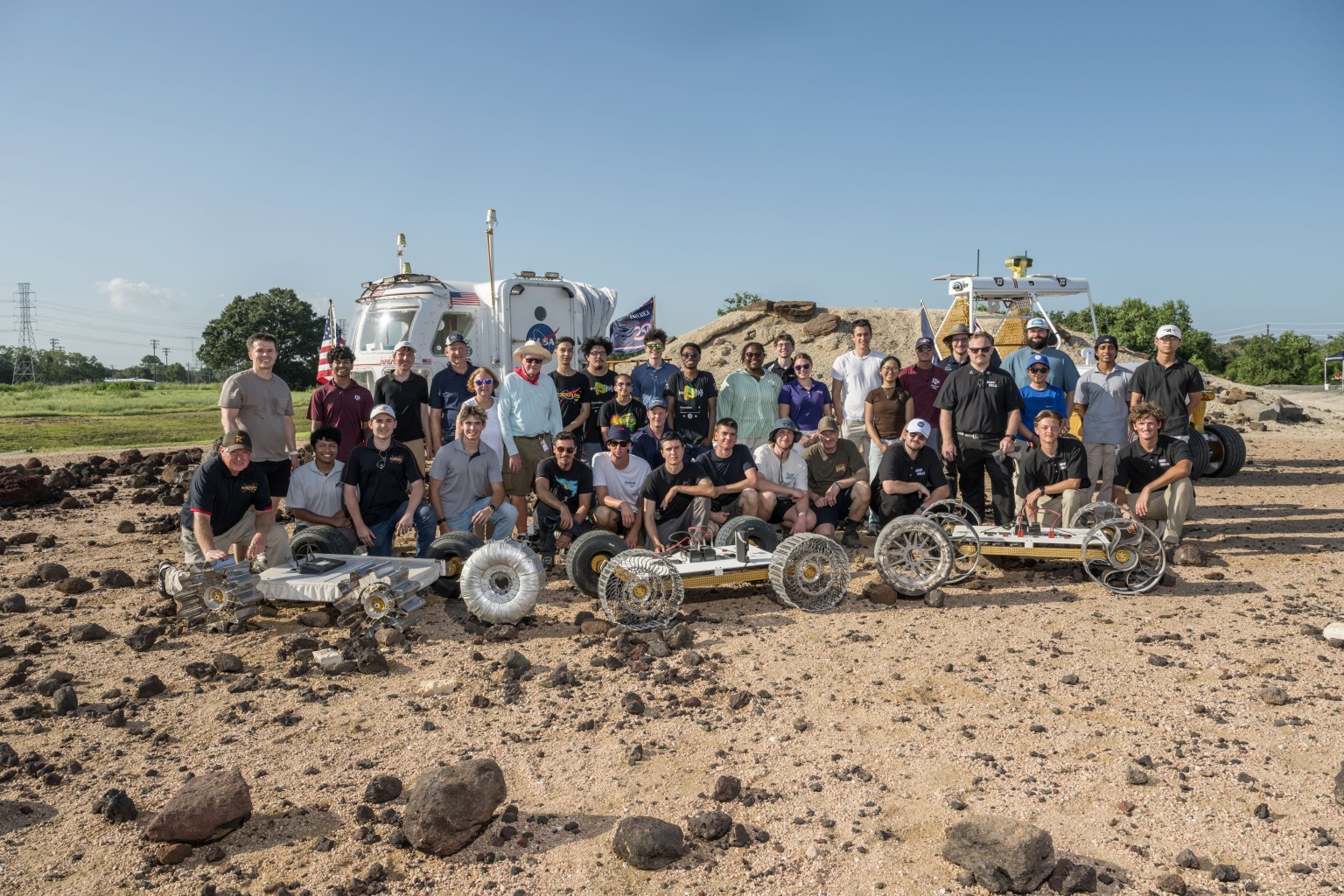
NASA engineers, students from the NASA Robotics Academy, and teams from the Rock and Roll with NASA Challenge showcased their wheel prototypes at Johnson Space Center’s Rock Yard in Houston on July 31, 2026. The competition aimed to develop next-generation lunar rover wheels that would enable surface mobility for Moon Base operations.
Fifty-one countries submitted 128 entries, and five teams were selected to advance to the final phase. The aim was to create lightweight, durable, and scalable wheels that could support longer lunar operations while maintaining traction, absorbing impacts, and functioning in the harsh lunar environment.
Ed Herrera, a robotics engineer at NASA Johnson and co-leader of the challenge, explained that each additional kilometer a rover can travel would greatly expand exploration possibilities and infrastructure development. NASA's Johnson Space Center used ground prototypes for testing mobility technologies, with lunar terrain vehicles destined for the lunar surface via the Commercial Lunar Payload Services initiative.
The wheel prototypes were attached to a 45-kilogram test rover, MicroChariot, and subjected to various courses at Johnson’s Rock Yard to assess performance across different terrains. The competition showcased diverse designs, including the HTR Variable Flex Lunar Wheel from Hellenic Technology of Robotics SA, which utilized an internal system to adjust wheel stiffness based on terrain and vehicle requirements. Another design, the Hiper Wheel by Hyperbola, employed tensioned cables for enhanced performance.
The competition highlighted the potential of crowdsourcing in lunar wheel design, aiming to broaden the range of options for wheel technologies and accommodate various lunar missions and environments.
Written by urgent.news from NASA Science's reporting — not their text. Machine-written — may contain errors; check the original before relying on it.
This story
This is one outlet's version. Read the fullest account.