Missiles below, mountains ahead: How the IAF had to improvise in the middle of war
The Indian Air Force conducted a unique high-altitude air-to-ground campaign during the 1999 Kargil conflict. Fighter pilots faced unprecedented challenges fighting at altitudes of 14-18,000 feet. Early losses prompted tactical changes and accelerated the integration of precision-guided munitions. The conflict highlighted India's need for indigenous navigation technology and satellite systems.…
In 1999, the Indian Air Force (IAF) found itself in unprecedented territory during the Kargil conflict. Historically, the Indian military had faced adversity in high-altitude warfare, but never to the extent faced during the Kargil conflict. The IAF was tasked with conducting air-to-ground operations at extreme altitudes, a feat for which it had not traditionally been trained or equipped.
The operation, known as Operation Safed Sagar, commenced on May 26, 1999. Prior to this, the IAF had been involved in support missions, including logistics, casualty evacuation, and aerial reconnaissance, for several days. The Army, too, had been engaged in direct combat operations in the Kargil sector since May 26, 1999.
Operating at such altitudes posed unique challenges for the IAF. The Army had experience in high-altitude warfare, having fought in the Dras and Kargil sectors in 1948, and in the Himalayas during the 1962, 1965, and 1971 wars. The IAF, on the other hand, had been operating fighters from Ladakh and flying Combat Air Patrols (CAP) over the Siachen sector since the 1980s. The first fighter to land at Leh was the Gnat in 1964.
However, Kargil presented a different challenge altogether. Pakistani troops had crossed the Line of Control and occupied high-altitude mountain positions. These positions threatened a crucial road link connecting Ladakh with the rest of India. The gravity of the situation became apparent after Army patrols were ambushed in the Kaksar region in May.
Initially, the IAF provided logistical support, casualty evacuation, and reconnaissance. During one reconnaissance mission, a Canberra of the 106 Squadron was hit by a Man-Portable Air Defence System (MANPADS), but managed to return to Srinagar Air Force Station. The Army was tasked with fighting an uphill battle, while the IAF began offensive air operations on May 27, 1999.
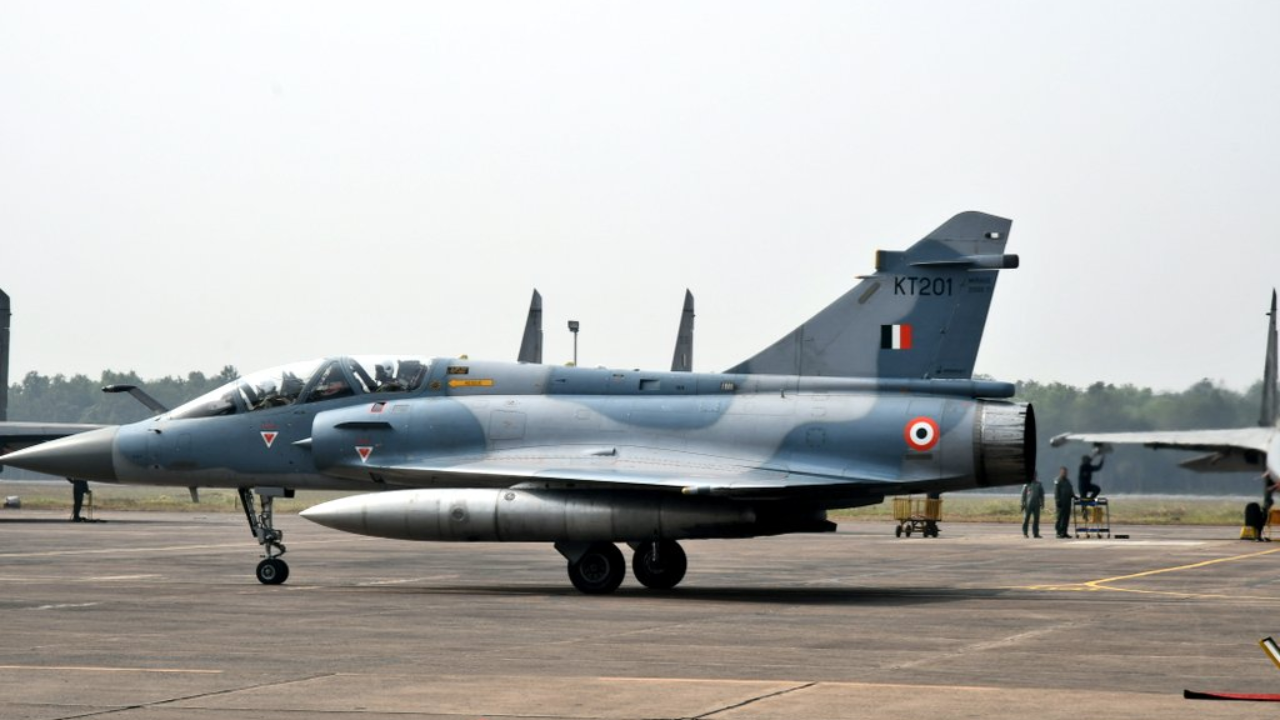
The IAF used a variety of aircraft types, including the MiG-21, Mirage-2000, Jaguar, MiG-23BN, MiG-25, MiG-27, MiG-29, and Sukhoi-30, for different roles. These included air strikes, reconnaissance, escorting strike packages, and conducting combat air patrols. The IAF was flying at altitudes far above those of its high-altitude air-to-ground training range, located at around 10,000 feet.
The thin air at such altitudes made bombing more difficult. Reduced air resistance altered bomb ballistics and drift, while high winds could reach extreme speeds. Despite these challenges, the IAF managed to ensure that no such incidents occurred. However, the government's decision to not allow Indian forces to cross the LoC limited the attack geometry available to pilots and restricted the directions from which targets could be approached.
The initial stages of the offensive operations saw serious reversals. Flight Lieutenant K Nachiketa's MiG-27 suffered an engine flameout, leading to his ejection. Squadron Leader Ajay Ahuja was subsequently shot down by a Pakistani MANPADS. Another IAF Mi-17 helicopter was also shot down while carrying out a rocket attack near Tololing. These losses forced the IAF to rethink its tactics in the face of the Pakistani threat.
Written by urgent.news from Times of India's reporting — not their text. Machine-written — may contain errors; check the original before relying on it.