Inside the Montreal lab working to prepare Canada against future pandemics
In a biomedicine laboratory at Polytechnique Montréal, animal protein grows in a bubbling orange solution as researchers in white lab coats take samples with large syringes.
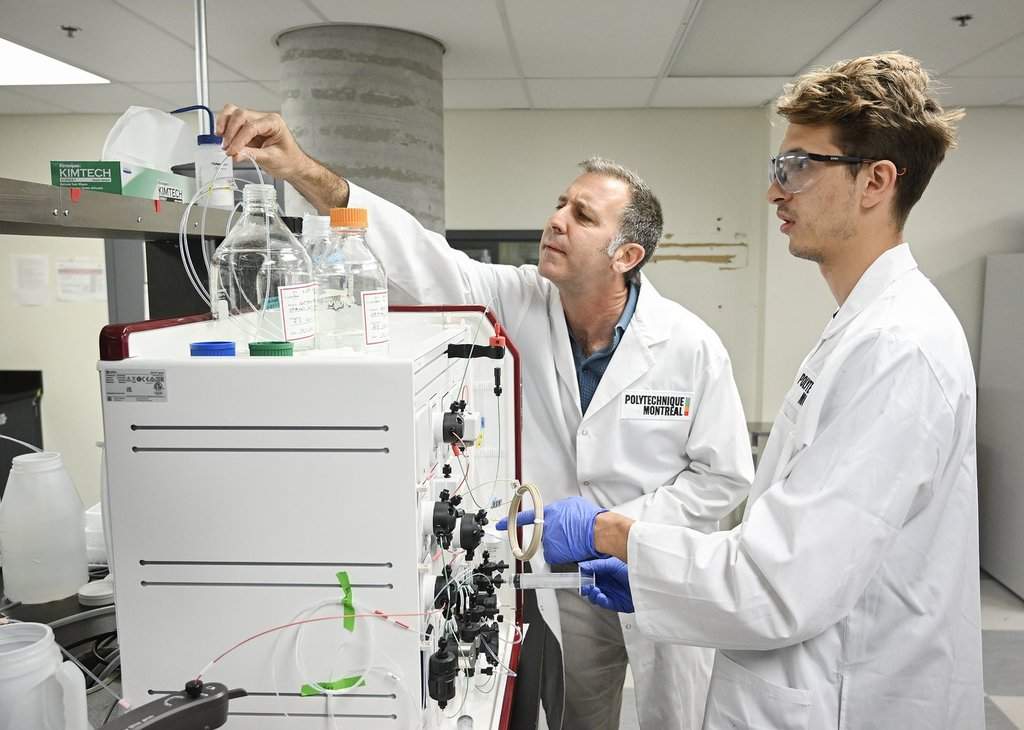
In a biotechnology laboratory at Polytechnique Montréal, researchers in sterile white coats examine samples in bright orange solutions, concentrating on antibodies produced by cells. Adjacent to shelves of glass bottles containing clear liquids, computer monitors display the progress of their work. In another room, a massive cryogenic freezer holds samples of proteins and cells used for vaccine and medicine development.
The Montreal lab is part of a federal initiative called Ramp Up, collaborating with research institutions nationwide to address gaps in biomanufacturing. Head researcher Gregory De Crescenzo emphasizes the importance of preparedness, stating, "It's not a matter of if, but when." With the rise of vaccine misinformation during the pandemic, De Crescenzo hopes to rebuild public trust by providing a behind-the-scenes look at his lab.
Ramp Up aims to accelerate vaccine and biomedical processes, as well as train students. The lab primarily focuses on viruses like influenza and bird flu, but the research can be applied to various diseases. Addressing Canada's shortcomings during the COVID-19 pandemic, such as limited biomedical production capacity and fragile supply chains, the initiative seeks to enhance the nation's preparedness.
De Crescenzo likens the lab's role to creating recipes, with research conducted under strict guidelines before being transferred to industries for scaling. He acknowledges ongoing efforts to ensure scalability and seamless collaboration among government, academia, and industry.
Infectious disease specialist Isaac Bogoch from the University of Toronto emphasizes the need for a whole-of-government and whole-of-society approach to pandemic preparedness, highlighting the importance of cross-sector collaboration. Health Canada has invested $712 million in upgrading biocontainment facilities and creating research hubs, with the goal of training over 15,000 skilled workers by 2029.
Written by urgent.news from Global News's reporting — not their text. Machine-written — may contain errors; check the original before relying on it.