Imam Turki Reserve reports hatching of seven red-necked ostrich chicks
Seven red-necked ostrich chicks hatched in Imam Turki bin Abdullah Royal Reserve in Q2 2026, marking progress in species reintroduction efforts.
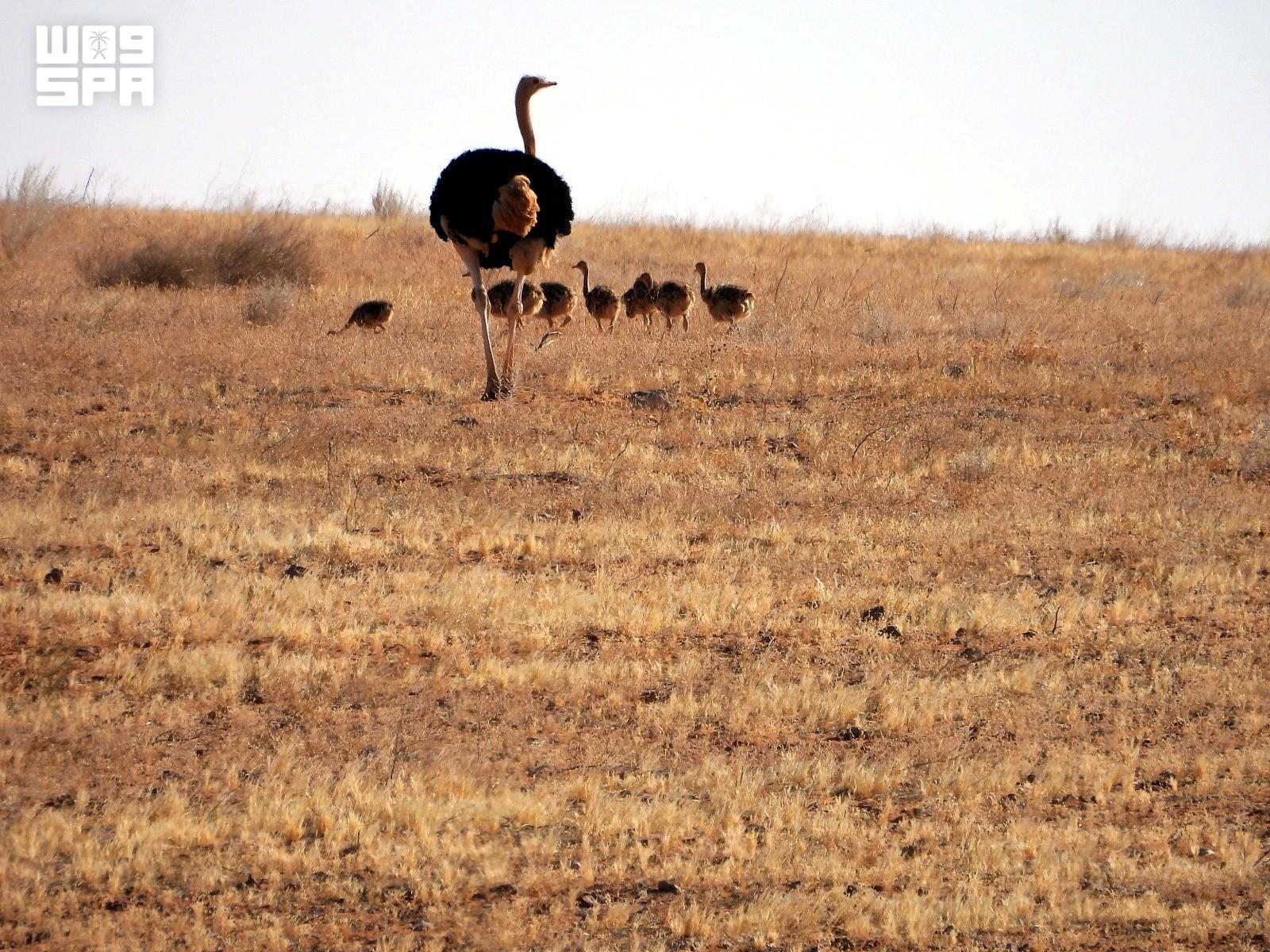
Seven red-necked ostrich chicks have hatched at the Imam Turki bin Abdullah Royal Reserve in Q2 2026, signaling progress in the species' reintroduction program. The Imam Turki bin Abdullah Royal Reserve Development Authority announced the hatching, which underscores the success of their efforts to restore a native species that once thrived in the reserve.
This achievement represents a significant milestone in the program's journey to increase the population of red-necked ostriches and bolster the stability and reproduction of their groups in the wild. The officials emphasized that the natural breeding of these birds is a critical milestone, marking the transition from the release and adaptation phase to a more self-sustaining stage where the species can complete their life cycle and reproduce freely in their natural habitat.
This development is a testament to the suitability of the reserve's natural habitats, as well as the success of protection and field monitoring efforts that foster population growth, expansion, and a stronger presence of the ostrich within the local ecosystem. The authority follows a holistic approach to reintroducing native species, encompassing habitat assessment, preparation and protection, selection of ideal release sites, and continuous field monitoring.
This monitoring process includes observing the species' movement, adaptation, breeding, and spread, all of which are key indicators used to measure and enhance the success of reintroduction programs. The ultimate goal is to establish stable, self-sustaining populations of native species within their natural habitats, in line with sustainable principles and Saudi Vision 2030.
The red-necked ostrich's return and breeding are part of a broader initiative by the authority to restore wildlife by reintroducing species to their original ranges, bolstering their populations, and creating supportive environments. These efforts contribute to biodiversity conservation, the restoration of natural balances, and ecosystem stabilization.
Written by urgent.news from Ajel English's reporting — not their text. Machine-written — may contain errors; check the original before relying on it.