Hyderabad-born MIT astronomer Rohan Naidu helps uncover a ‘black hole star’
Astronomers using the James Webb Space Telescope have identified an exceptionally bright, red object from the early universe that may be a previously unknown “black hole star”. Led by Hyderabad-born MIT astronomer Rohan Naidu, the study suggests a massive black hole could be concealed within dense hydrogen, potentially explaining the mysterious “little red dots” seen by JWST.
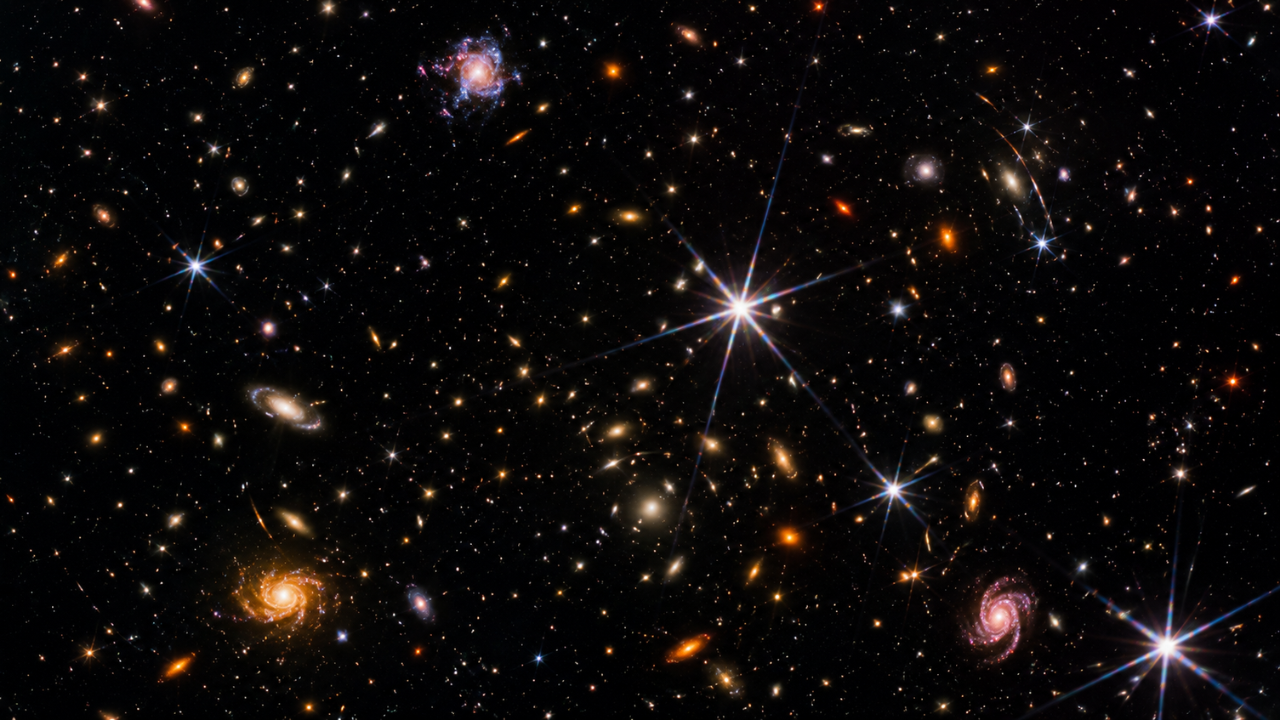
In a groundbreaking discovery, an astronomer born in Hyderabad has joined forces with researchers to uncover an enigmatic cosmic entity that bears the striking resemblance to a colossal red star yet pulsates with the luminosity of something vastly more powerful than an ordinary star. The object, designated MoM-BH-1*, may in fact be a black hole cloaked in a thick layer of hydrogen, rendering it approximately the size of our solar system and a staggering 100 billion times brighter than a typical star.
This remarkable find, published in the prestigious journal Nature, was made possible through the Mirage or Miracle (MoM) survey, a pioneering effort aimed at detecting some of the most ancient and distant galaxies in the universe. Upon analyzing the data from the James Webb Space Telescope (JWST), the researchers stumbled upon a source that displayed an aberrant brightness and an unusual reddish hue—one that initially seemed to fit the profile of a distantly located galaxy.
However, closer examination of MoM-BH-1* revealed several anomalous characteristics that defied conventional stellar explanations. Its extraordinary brightness and spectral features pointed towards an environment of such extreme density that it hinted at the presence of a colossal, dark object at its core. This led the scientists to propose a groundbreaking hypothesis: MoM-BH-1* could be a "black hole star," a novel configuration wherein a central black hole of approximately 100,000 times the mass of our Sun is enveloped by a vast cloud of dense hydrogen, creating an object that appears stellar in size and brightness.
The term "black hole star" denotes a theoretical construct rather than a conventional celestial body. According to the researchers, the central black hole could be responsible for the source's immense energy output, while the surrounding hydrogen envelope determines how that energy is perceived from a distance. As matter spirals towards the black hole, the conversion of gravitational energy into radiation could be unparalleled, surpassing the energy generated by even the most luminous ordinary stars.
What makes MoM-BH-1* particularly intriguing is its extreme luminosity, which dwarfs that of any known conventional star by a factor of 100 billion. This level of brightness is exceptionally difficult to attribute to the process of nuclear fusion, prompting scientists to consider an alternative source of energy: the extraordinary activity of an accreting black hole.
The immense heat generated by matter falling into the black hole's gravitational well could result in the emission of colossal quantities of radiation, effectively masking the black hole itself beneath a cloak of stellar-like properties.
Another crucial clue emerged from the object's spectrum, which exhibited an unusually deep Balmer break—a spectral feature indicative of hydrogen absorbing specific wavelengths of light. The strength of this break was so profound that it posed a significant challenge in explaining the object as a mere aggregation of ordinary stars.
Furthermore, the chemical composition of MoM-BH-1* was notably devoid of heavier elements, with hydrogen and helium dominating the observed signatures. This observation is particularly significant given the object's origin in the early universe, a period preceding the generation of heavy elements through successive stellar generations.
To better understand the potential red appearance of MoM-BH-1*, the researchers conducted simulations to determine whether the object's reddish hue could be attributed to dense hydrogen alone. Initially, the team considered the possibility that dust might be responsible for the observed reddening. However, they explored the possibility that hydrogen itself could create such an effect.
Through their simulations, the researchers demonstrated that extremely dense hydrogen could behave almost like the surface of an enormous star, forming an opaque outer layer when an accreting black hole is introduced into the model. This model closely aligned with several of the properties observed by JWST, providing compelling evidence in support of the black hole star hypothesis.
While further observations are necessary to conclusively establish the existence of black hole stars as a new class of astrophysical objects, the discovery of MoM-BH-1* represents a monumental leap in our understanding of the early universe. The presence of such an extraordinary entity not only sheds light on the potential existence of these mysterious cosmic entities but also has the potential to explain the numerous "little red dots" detected by JWST during its early observations of the universe.
In essence, this groundbreaking discovery underscores the transformative power of cutting-edge telescopes like the JWST in unraveling the cosmic enigmas that have long eluded human comprehension. Through the collaborative efforts of an astronomer born in Hyderabad and a team of dedicated researchers, a previously unimaginable object has emerged from the cosmic depths, inviting us to contemplate the limitless possibilities that lie within the vast expanse of the universe.
Written by urgent.news from Times of India's reporting — not their text. Machine-written — may contain errors; check the original before relying on it.