Human skull featuring elaborate mosaic ornamentation repatriated to Mexico
Likely reassembled in modern times, the skull was returned by the Netherlands following a grassroots campaign; it will go on display at a community museum in Oaxaca
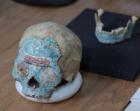
In May 2025, a Mixtec human skull adorned with turquoise, shell, jadeite, and quartz was returned to Mexico from the Dutch city of Leiden. The ornate skull, which was likely assembled in modern times, had been displayed at the Wereldmuseum in Leiden for over six decades. Its repatriation was facilitated by the Nchivi Ñuu Savi collective and Mexican artist Daniel Aguilar Ruvalcaba.
The skull's provenance is complex, as it was acquired by the Wereldmuseum in 1964 from American dealer Robert Stolper, despite lacking proper documentation. Authenticity concerns led to analyses in 2011 and 2012, which suggested the skull belonged to a male aged 35-49 from southern Mexico and was of Mixtec association.
The mosaic materials were pre-Hispanic, while some shells were likely buried earlier, and 99% of the adhesive was modern. The skull, one of ten similar examples, is believed to have been created in the border region between Puebla and Oaxaca, where turquoise has been found in dry caves alongside burials.
The return of the skull marks a significant victory for the Nchivi Ñuu Savi collective, which had been advocating for its repatriation. The group's efforts were initially disregarded by Mexican authorities, but the collective's campaign gained traction, leading to the skull's return and reconnection with community memory.
Culture Minister Claudia Curiel acknowledged the collective's initiative, emphasizing the importance of recognition and respect for ancestors, their memory, and the bond between the community and their heritage. The skull's return is seen as an act of historical justice and dignity.
The museum where the skull will be displayed, the Yucu Saa Museum in Villa de Tututepec, Oaxaca, is scheduled to open the exhibition in April 2027, pending the implementation of improved security and exhibition conditions. Mexican President Claudia Sheinbaum described the repatriation as "the most important archaeological finding of the last decade."
Written by urgent.news from The Art Newspaper's reporting — not their text. Machine-written — may contain errors; check the original before relying on it.
This story
This is one outlet's version. Read the fullest account.