Hubble & Gaia solve our galaxy's merger mystery
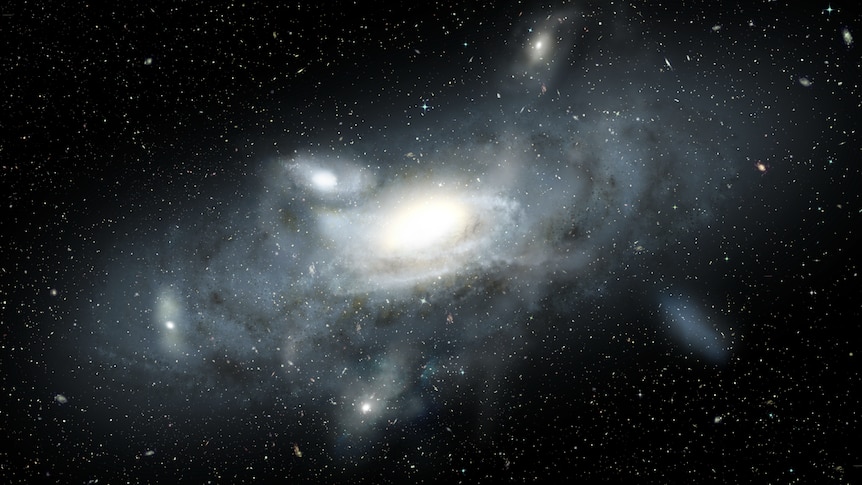
Our home galaxy, the Milky Way, grew to its current size in part by consuming smaller galaxies. Now, new data from the NASA/ESA Hubble Space Telescope show definitive evidence of a dwarf galaxy merging with the young Milky Way galaxy in the earliest phases of its evolution. This finding extends our knowledge of our galaxy’s history 1.8 billion years farther back in time than before.
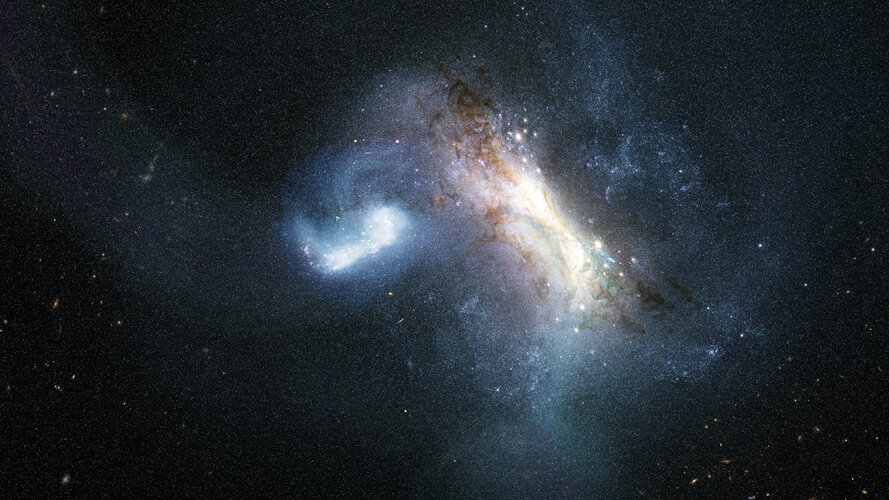
The Milky Way, our home galaxy, grew to its current massive size by merging with smaller galaxies. Recent observations from the NASA/ESA Hubble Space Telescope have provided evidence of a dwarf galaxy named LKH (Low-energy-Kraken-Heracles) merging with the young Milky Way galaxy 11.8 billion years ago, just 2 billion years after the Big Bang.
This discovery extends our knowledge of the galaxy's history 1.8 billion years further back in time. The Milky Way, a massive spiral galaxy containing hundreds of billions of stars, has grown through star formation and mergers with other galaxies. The most recent significant merger occurred with the Sagittarius dwarf galaxy, which began over 6 billion years ago and continues to this day.
Prior to that, the Milky Way consumed another dwarf galaxy called Gaia-Sausage-Enceladus ten billion years ago, significantly affecting the structure of its disc of stars. Hubble's high-resolution imaging allowed researchers to analyze the ages and metal contents of 39 globular clusters in the inner 20,000 light-years of our galaxy, revealing a third population of clusters that originated from the LKH merger.
These clusters are older than the groups from the Gaia-Sausage-Enceladus merger but younger than those born in the Milky Way galaxy. This finding demonstrates that stars and structures from external galaxies played a crucial role in the early evolution of our galaxy, challenging previous assumptions that only stars born within the Milky Way were significant in shaping its formation.
The team plans to continue their research by studying more globular clusters to uncover additional mergers in our galaxy's distant past.
Written by urgent.news from ESA Space Science's reporting — not their text. Machine-written — may contain errors; check the original before relying on it.