Geldanlage: Warum Agraraktien jetzt für Anleger interessant sind
Der Agrarsektor hat im ersten Halbjahr den breiten Markt geschlagen. Langfristig sieht es zwar anders aus, allerdings hält ein Experte gerade das für eine Einstiegschance.
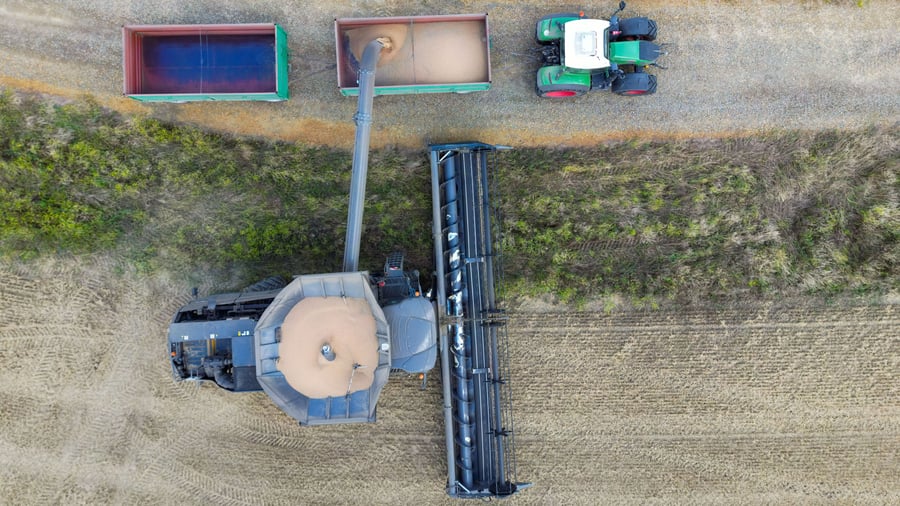
A growing global food demand is projected to increase by nearly 50% by 2050 compared to 2012, according to the Food and Agriculture Organization (FAO) of the United Nations. However, the sector faces challenges from climate change, which brings heat and heavy rainfall. At the heart of these trends is the agricultural industry, which includes machinery, seeds, pesticides, fertilizers, and food manufacturers.
Investors are attracted to this sector not only due to its structural benefits from a growing world population but also as a diversification tool. Stephan Werner, a portfolio manager at DWS, explains that the agricultural universe primarily consists of staple crops, consumer goods, and industrial assets, with minimal exposure to IT companies, which can improve portfolio risk diversification.
Additionally, the sector's steady demand makes it less dependent on economic cycles. Geopolitical conflicts affect export revenues, while droughts and floods impact harvest yields and drive up prices. The impact varies across the industry: machinery and seed manufacturers benefit from high food prices, while food and meat producers face rising costs.
The extent to which cost increases can be passed on depends on competition, demand, regulation, and consumer price sensitivity. Stephan Werner notes that the sector has performed well in the first half of the year, with the S&P Commodity Producers Agribusiness Index yielding 12% compared to the MSCI World's 8%. However, the long-term outlook is less favorable, with the index returning only 3 to 6% per year over five to ten years.
Simon Frank, a financial advisor at Pictet Asset Management, sees this as an entry opportunity despite strong fundamentals, defensive business models, and relatively low volatility. He emphasizes structural trends, particularly the shift towards healthier diets driven by health and wellness awareness, longer life expectancies, aging populations, new nutritional recommendations, and rising healthcare costs.
Danone, a French food company known for brands like Activia, Alpro, and Evian, is a major holding in the "Pictet Nutrition Fund" (ISIN: LU0366534344), which caters to healthier products. Nedialko Nedialkov, a portfolio manager at Allianz Global Investors, focuses on technology to counter climate change effects such as heat, droughts, floods, and irregular precipitation.
He highlights precision agriculture and automation as major opportunities, mentioning camera-based individual plant treatments or data analysis for better management. Deere & Co, known for both farm machinery and precision agriculture platforms, is a notable player in this area. Corteva, a seed company, is also an attractive option, especially for developing more resilient crop varieties.
For those not interested in single stocks, ETFs like the "iShares Agribusiness ETF" (IE00B6R52143) offer exposure to major agricultural companies, including Corteva and Archer Daniels Midland. The "Global X AgTech & Food Innovation ETF" (IE000EBFYWX3) focuses on agricultural innovations, primarily Deere & Co, making it a concentrated ETF with only 31 positions and a small $5.8 million fund volume.
Written by urgent.news from Handelsblatt's reporting — not their text. Machine-written — may contain errors; check the original before relying on it.
This story
This is one outlet's version. Read the fullest account.